Transaction value rejection requires reliable corroboration; refundable VAT is excluded and temporary registration does not defeat new-vehicle exempti...
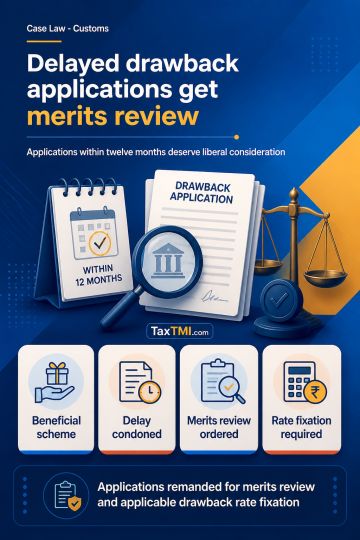
Appellate jurisdiction remains available where a wrist-worn gold ornament cannot conclusively be characterised as imported baggage at the preliminary ...
Written complaint requirement bars cognizance on police reports for securities offences, while unsupported breach of trust and cheating allegations fa...
The HC dismissed the petition challenging action under section 129(3) of the GST Act, holding that although an e-way bill was ultimately produced before the seizure and penalty orders, it was not generated contemporaneously with movement and was created after interception (at 1:19 p.m.), evidencing non-compliance with statutory requirements; accordingly, the court found no basis to infer absence of intent to evade tax or to disturb the impugned orders. The court applied its prior ratio and upheld the seizure and penalty, concluding that, on the facts and in law, no interference with the administrative orders was warranted.
The HC dismissed the petition challenging action under section 129(3) of the GST Act, holding that although an e-way bill was ultimately produced before the seizure and penalty orders, it was not generated contemporaneously with movement and was created after interception (at 1:19 p.m.), evidencing non-compliance with statutory requirements; accordingly, the court found no basis to infer absence of intent to evade tax or to disturb the impugned orders. The court applied its prior ratio and upheld the seizure and penalty, concluding that, on the facts and in law, no interference with the administrative orders was warranted.
Note: It is a system-generated summary and is for quick reference only.
 TaxTMI
 of 4798





















 Join Channel


 TaxTMI
