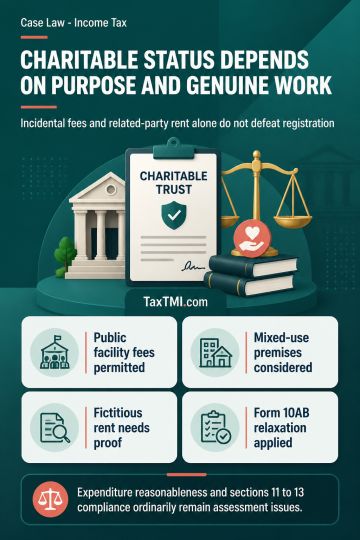
Charitable registration turns on predominant purpose and genuine activities, while incidental fees and related-party rent require supporting adverse m...
MAT book-profit adjustments exclude disallowances for exempt-income expenditure and demerger expenditure unless expressly listed under the statutory c...
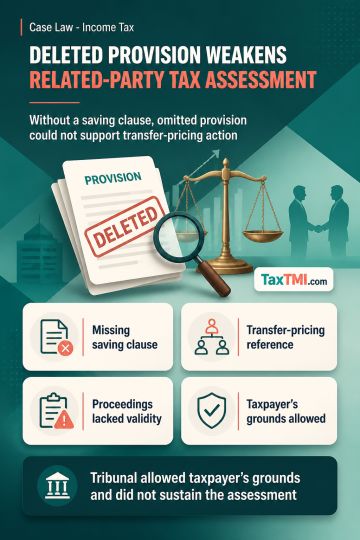
Omitted specified domestic transaction provision invalidates related-party expenditure transfer-pricing references and assessments based on consequent...
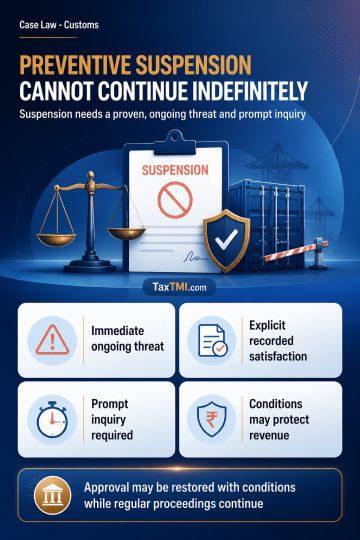
Preventive suspension requires an immediate continuing threat and cannot become indefinite without inquiry, fresh evidence, or proportionate safeguard...
The HC dismissed the petition challenging action under section 129(3) of the GST Act, holding that although an e-way bill was ultimately produced before the seizure and penalty orders, it was not generated contemporaneously with movement and was created after interception (at 1:19 p.m.), evidencing non-compliance with statutory requirements; accordingly, the court found no basis to infer absence of intent to evade tax or to disturb the impugned orders. The court applied its prior ratio and upheld the seizure and penalty, concluding that, on the facts and in law, no interference with the administrative orders was warranted.
The HC dismissed the petition challenging action under section 129(3) of the GST Act, holding that although an e-way bill was ultimately produced before the seizure and penalty orders, it was not generated contemporaneously with movement and was created after interception (at 1:19 p.m.), evidencing non-compliance with statutory requirements; accordingly, the court found no basis to infer absence of intent to evade tax or to disturb the impugned orders. The court applied its prior ratio and upheld the seizure and penalty, concluding that, on the facts and in law, no interference with the administrative orders was warranted.
Note: It is a system-generated summary and is for quick reference only.
 TaxTMI
 of 4798
















 Join Channel


 TaxTMI
