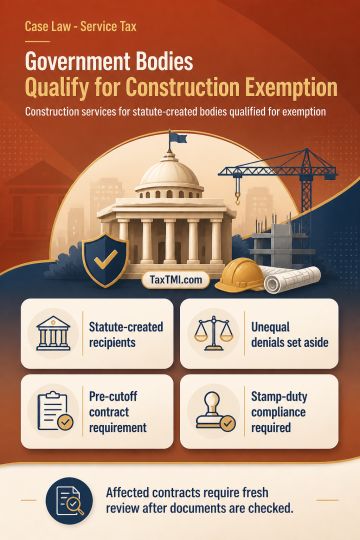
Governmental authority status supports construction-service exemption, while pre-cutoff contract and stamp-duty compliance requires verification on re...
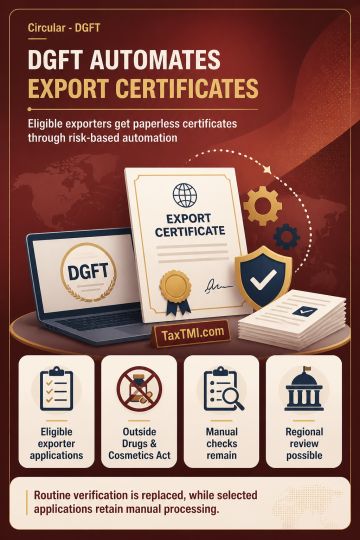
Automated Free Sale and Commerce Certificates enable paperless processing while retaining risk-based manual verification for selected exporter applica...
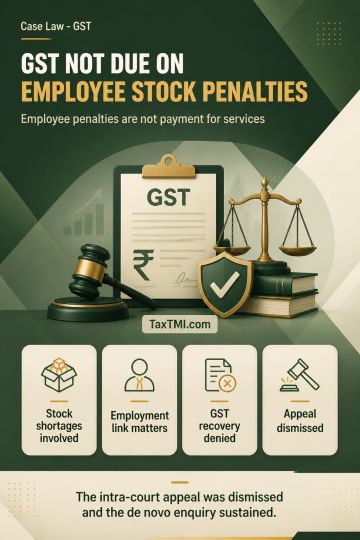
Employee stock-shortage penalties do not constitute consideration for services, preventing GST collection under Schedule II in employment relationship...
ITAT upheld CIT(A)'s deletion of an addition where the assessee wrote off sundry advances to its subsidiary, concluding the advances and share capital were integrally connected to the assessee's hospitality business transferred to the subsidiary. The Tribunal found the write-off incurred in the relevant assessment year, attributable to business exigencies (pandemic-related slowdown), and therefore deductible under s.37(1) as a business loss and alternatively under s.36(1)(vii) as bad debt (part of which had been offered as income). The AO's contention that the advances lacked nexus with business or were merely capital liabilities was rejected; the ITAT found no infirmity in CIT(A)'s order.
ITAT upheld CIT(A)'s deletion of an addition where the assessee wrote off sundry advances to its subsidiary, concluding the advances and share capital were integrally connected to the assessee's hospitality business transferred to the subsidiary. The Tribunal found the write-off incurred in the relevant assessment year, attributable to business exigencies (pandemic-related slowdown), and therefore deductible under s.37(1) as a business loss and alternatively under s.36(1)(vii) as bad debt (part of which had been offered as income). The AO's contention that the advances lacked nexus with business or were merely capital liabilities was rejected; the ITAT found no infirmity in CIT(A)'s order.
Note: It is a system-generated summary and is for quick reference only.
 TaxTMI
  TaxTMI
 of 4828









 Join Channel


