Political contribution deductions require genuine transactions; banking records and party registration alone cannot defeat evidence of accommodation e...
Post-death GST liability permits fresh proceedings against legal representatives, while discontinued-business recovery remains limited to the inherite...
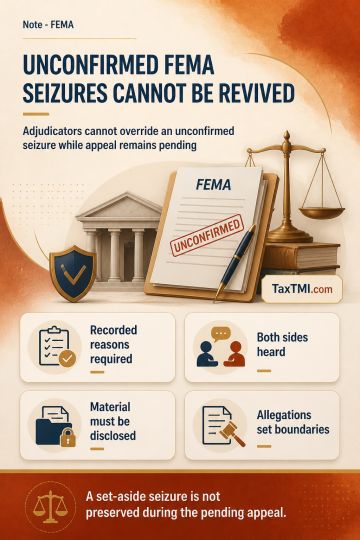
Non-confirmation of FEMA seizure prevents adjudicators from overriding pending appellate findings on recorded reasons and suspected foreign asset hold...
The HC dismissed the petitions and upheld the summoning order in a cheque-dishonour prosecution under the N.I. Act, holding that prima facie material implicated the Applicant as a director "in charge of and responsible for the conduct of the business" at the time of the alleged offence. The court applied governing precedent on vicarious liability of directors, recognizing that pleadings need not mirror statutory phrasing so long as they convey the director's active involvement in day-to-day operations and the impugned transactions. The HC found no procedural breach of natural justice warranting quashal and held that the Applicant's denial of involvement is a defence to be adjudicated at trial.
The HC dismissed the petitions and upheld the summoning order in a cheque-dishonour prosecution under the N.I. Act, holding that prima facie material implicated the Applicant as a director "in charge of and responsible for the conduct of the business" at the time of the alleged offence. The court applied governing precedent on vicarious liability of directors, recognizing that pleadings need not mirror statutory phrasing so long as they convey the director's active involvement in day-to-day operations and the impugned transactions. The HC found no procedural breach of natural justice warranting quashal and held that the Applicant's denial of involvement is a defence to be adjudicated at trial.
Note: It is a system-generated summary and is for quick reference only.
 TaxTMI
  TaxTMI