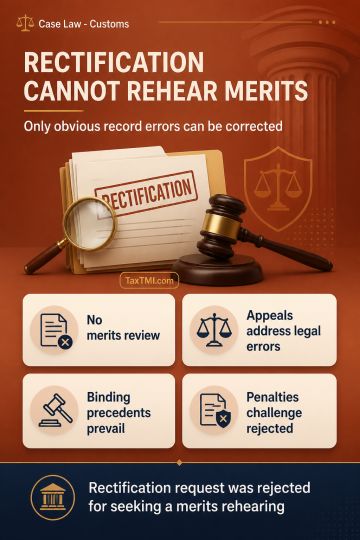
Rectification of mistake remains limited to self-evident record errors, preventing merits review through miscellaneous applications and preserving fin...
Tender creditworthiness conditions may extend to de facto Promoter Directors, with post-participation challenges generally barred absent arbitrariness...
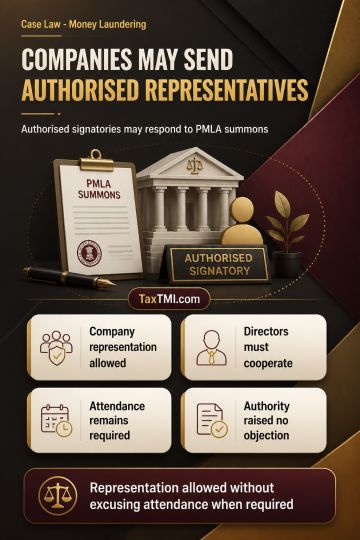
Corporate representation in PMLA summons proceedings permitted through an authorised signatory, subject to directors' continuing cooperation and atten...
Helicopter charter classification requires effective control analysis, while territorial performance, reasoned credit orders and wilful suppression de...
Specified fund definition expands PAN exemption eligibility for registered alternative investment funds and qualifying International Financial Service...
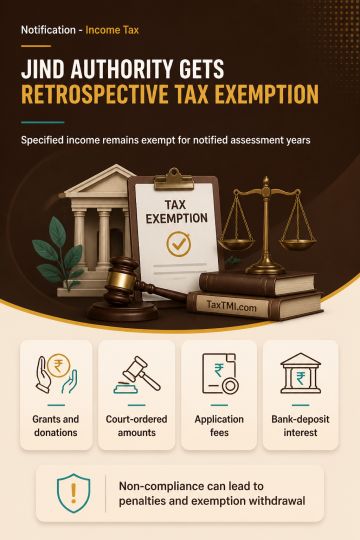
Tax exemption for specified legal-services authority income applies retrospectively, subject to non-commercial activity, unchanged income sources, and...
The AT upheld the DGAP's finding that the respondent failed to pass on a commensurate reduction in GST on restaurant services, concluding the statutory rebuttable presumption under s.171 CGST Act was not discharged and that the investigating authority permissibly examined all products supplied by the registered person. The Tribunal held the respondent violated s.171(1) (and thereby contravened s.171(3A)) by denying tax-rate benefits to consumers. However, because s.171(3A)'s penal provision took effect after the period of contravention, the AT declined to impose the retrospective penal sanction; liability for the breach was affirmed but no penalty was imposed under the later-enacted provision.
The AT upheld the DGAP's finding that the respondent failed to pass on a commensurate reduction in GST on restaurant services, concluding the statutory rebuttable presumption under s.171 CGST Act was not discharged and that the investigating authority permissibly examined all products supplied by the registered person. The Tribunal held the respondent violated s.171(1) (and thereby contravened s.171(3A)) by denying tax-rate benefits to consumers. However, because s.171(3A)'s penal provision took effect after the period of contravention, the AT declined to impose the retrospective penal sanction; liability for the breach was affirmed but no penalty was imposed under the later-enacted provision.
Note: It is a system-generated summary and is for quick reference only.
 TaxTMI
 of 4805














 Join Channel


 TaxTMI