Statutory transfer formalities invalidated alleged share and property transfers, while retrospective record manipulation constituted oppression and mi...
Provisional attachment of laundered funds and equivalent-value property sustained, with statutory protection limited to pension, gratuity and providen...
Insolvency moratorium does not shield company officers from cheque dishonour prosecution for liability arising before corporate insolvency proceedings...
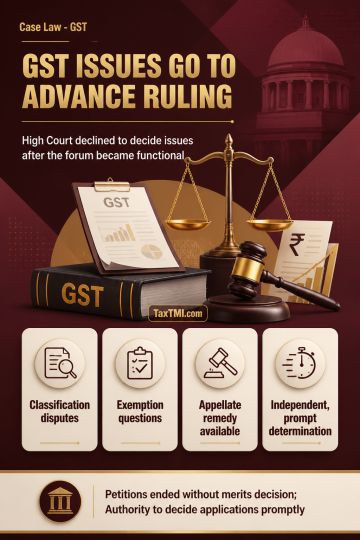
Advance-ruling mechanism governs pending GST classification, exemption and taxability disputes, limiting writ review once the specialised forum functi...
Page of 4805
Press 'Enter' after typing page number.
921 to 940 of 96092 Results
❮
❯
❯❯
0 / 200
Expand Note
Add to Folder
No Folders have been created
+
Are you sure you want to delete "My most important" ?
The AT upheld the DGAP's finding that the respondent failed to pass on a commensurate reduction in GST on restaurant services, concluding the statutory rebuttable presumption under s.171 CGST Act was not discharged and that the investigating authority permissibly examined all products supplied by the registered person. The Tribunal held the respondent violated s.171(1) (and thereby contravened s.171(3A)) by denying tax-rate benefits to consumers. However, because s.171(3A)'s penal provision took effect after the period of contravention, the AT declined to impose the retrospective penal sanction; liability for the breach was affirmed but no penalty was imposed under the later-enacted provision.
The AT upheld the DGAP's finding that the respondent failed to pass on a commensurate reduction in GST on restaurant services, concluding the statutory rebuttable presumption under s.171 CGST Act was not discharged and that the investigating authority permissibly examined all products supplied by the registered person. The Tribunal held the respondent violated s.171(1) (and thereby contravened s.171(3A)) by denying tax-rate benefits to consumers. However, because s.171(3A)'s penal provision took effect after the period of contravention, the AT declined to impose the retrospective penal sanction; liability for the breach was affirmed but no penalty was imposed under the later-enacted provision.
Note: It is a system-generated summary and is for quick reference only.
 TaxTMI
 of 4805

















 Join Channel


 TaxTMI