Charitable trust registration requires a specified-violation notice; settled cash deposits and related-party payments did not justify cancellation or ...
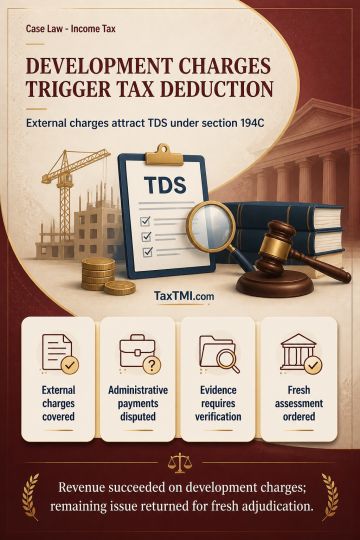
External development charges trigger TDS under section 194C, while disputed administrative payments require factual verification and fresh adjudicatio...
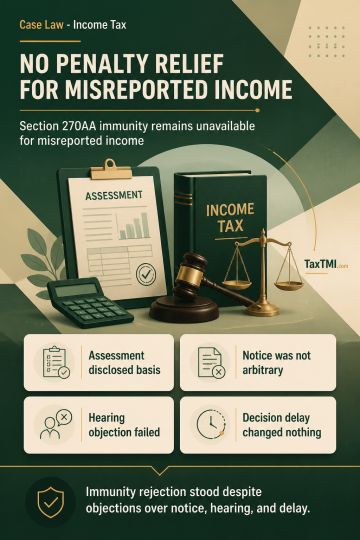
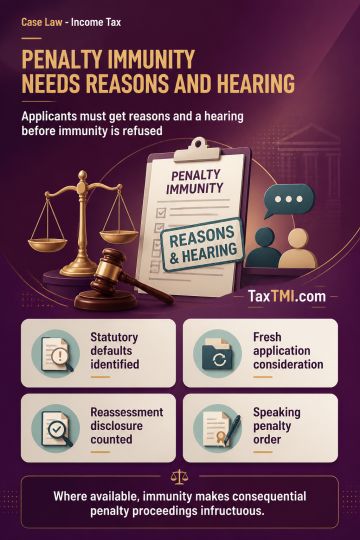
Section 270AA penalty immunity requires identified statutory defaults and a hearing before rejection; reassessment disclosure may constitute under-rep...
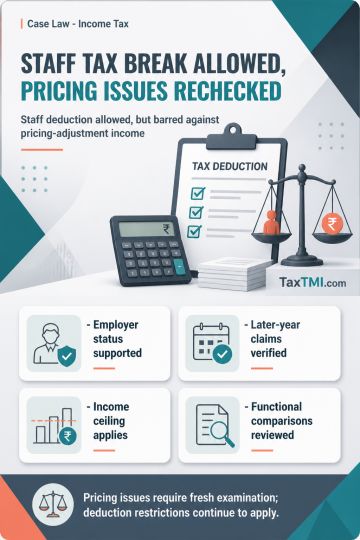
Section 80JJAA employee-cost deduction allowed for deployed staff but barred against transfer-pricing income enhancement, with pricing issues remanded...
Page of 4830
Press 'Enter' after typing page number.
141 to 160 of 96587 Results
❮
❯
❯❯
0 / 200
Expand Note
Add to Folder
No Folders have been created
+
Are you sure you want to delete "My most important" ?
The SC dismissed the appeal and refused interim relief, holding that the defendant's mark is not deceptively similar to the plaintiffs' well-known registered marks. Applying the anti-dissection rule, dominant-feature analysis and the average-consumer (imperfect recollection) test, the Court found the common laudatory term to be non-distinctive and not monopolizable absent cogent evidence of acquired distinctiveness. Differences in trade dress, label design, packaging, typography and overall commercial impression negated a real likelihood of confusion or passing off. The judgment was confined to the interlocutory stage; the Commercial Court was directed to try and dispose of the suit on merits within four months.
The SC dismissed the appeal and refused interim relief, holding that the defendant's mark is not deceptively similar to the plaintiffs' well-known registered marks. Applying the anti-dissection rule, dominant-feature analysis and the average-consumer (imperfect recollection) test, the Court found the common laudatory term to be non-distinctive and not monopolizable absent cogent evidence of acquired distinctiveness. Differences in trade dress, label design, packaging, typography and overall commercial impression negated a real likelihood of confusion or passing off. The judgment was confined to the interlocutory stage; the Commercial Court was directed to try and dispose of the suit on merits within four months.
Note: It is a system-generated summary and is for quick reference only.
 TaxTMI
  TaxTMI
 of 4830


















 Join Channel


