Political contribution deductions require genuine transactions; banking records and party registration alone cannot defeat evidence of accommodation e...
Post-death GST liability permits fresh proceedings against legal representatives, while discontinued-business recovery remains limited to the inherite...
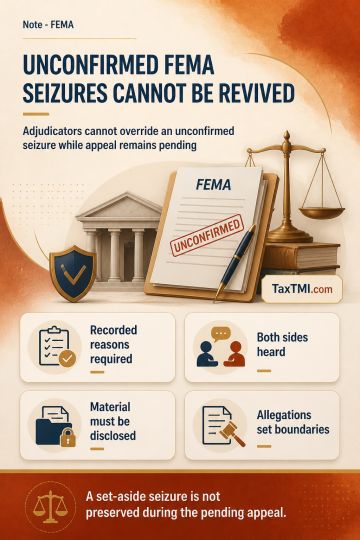
Non-confirmation of FEMA seizure prevents adjudicators from overriding pending appellate findings on recorded reasons and suspected foreign asset hold...
The SC dismissed the appeal and refused interim relief, holding that the defendant's mark is not deceptively similar to the plaintiffs' well-known registered marks. Applying the anti-dissection rule, dominant-feature analysis and the average-consumer (imperfect recollection) test, the Court found the common laudatory term to be non-distinctive and not monopolizable absent cogent evidence of acquired distinctiveness. Differences in trade dress, label design, packaging, typography and overall commercial impression negated a real likelihood of confusion or passing off. The judgment was confined to the interlocutory stage; the Commercial Court was directed to try and dispose of the suit on merits within four months.
The SC dismissed the appeal and refused interim relief, holding that the defendant's mark is not deceptively similar to the plaintiffs' well-known registered marks. Applying the anti-dissection rule, dominant-feature analysis and the average-consumer (imperfect recollection) test, the Court found the common laudatory term to be non-distinctive and not monopolizable absent cogent evidence of acquired distinctiveness. Differences in trade dress, label design, packaging, typography and overall commercial impression negated a real likelihood of confusion or passing off. The judgment was confined to the interlocutory stage; the Commercial Court was directed to try and dispose of the suit on merits within four months.
Note: It is a system-generated summary and is for quick reference only.
 TaxTMI
  TaxTMI