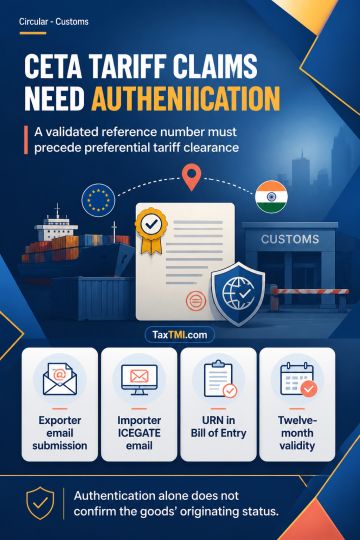
Origin Declaration authentication governs preferential tariff claims under India-UK CETA, requiring a validated reference number before import clearan...
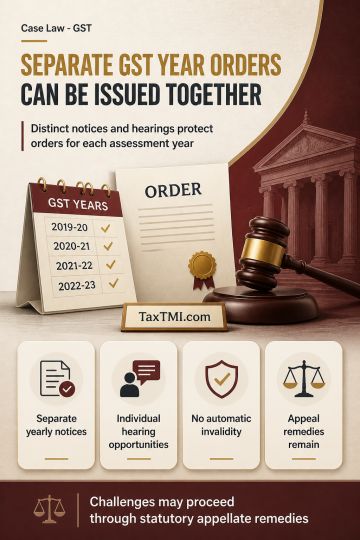
Separate assessment orders for different years remain valid when distinct notices and hearing opportunities prevent prejudice from combined proceeding...
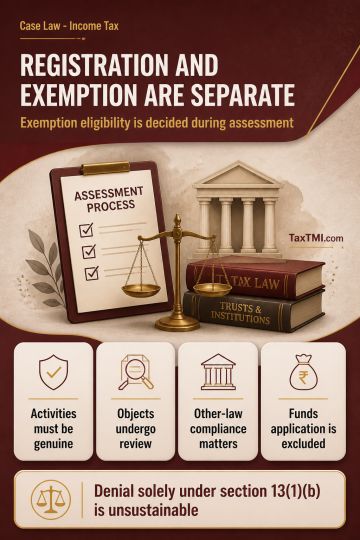
Defined public benefit can retain charitable character; registration renewal requires examining genuine activities and legal compliance, not surplus a...
Capital reduction is distinct from share buy-back, preventing buy-back tax; restructuring interest and related business deductions also survive scruti...
The HC dismissed the petition challenging the constitutional validity of Section 16(2)(c) and Rule 36(4) of the GST Act and Rules, 2017. The court relied on prior Division Bench decisions of the Kerala HC and Madras HC, which upheld these provisions. The Kerala HC held that the conditions imposed on purchasing dealers to avail benefits are not discriminatory under Article 14 but are legitimate regulatory requirements. Similarly, the Madras HC upheld Rule 36(4) as constitutionally valid. Given these authoritative precedents, the court found no grounds to interfere and dismissed the petition, affirming the validity of the contested statutory provisions.
The HC dismissed the petition challenging the constitutional validity of Section 16(2)(c) and Rule 36(4) of the GST Act and Rules, 2017. The court relied on prior Division Bench decisions of the Kerala HC and Madras HC, which upheld these provisions. The Kerala HC held that the conditions imposed on purchasing dealers to avail benefits are not discriminatory under Article 14 but are legitimate regulatory requirements. Similarly, the Madras HC upheld Rule 36(4) as constitutionally valid. Given these authoritative precedents, the court found no grounds to interfere and dismissed the petition, affirming the validity of the contested statutory provisions.
Note: It is a system-generated summary and is for quick reference only.
 TaxTMI
 of 4803















 Join Channel


 TaxTMI
