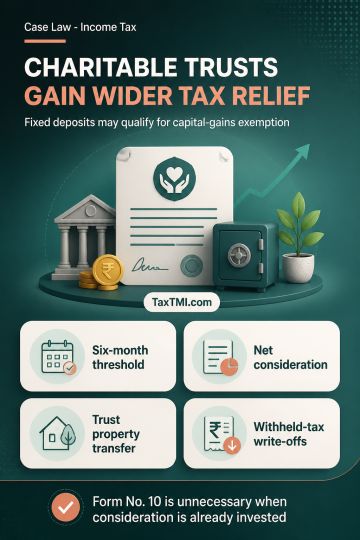
Capital-gains exemption for charitable trusts extends to qualifying fixed deposits, while unrecoverable TDS write-offs may constitute income applicati...
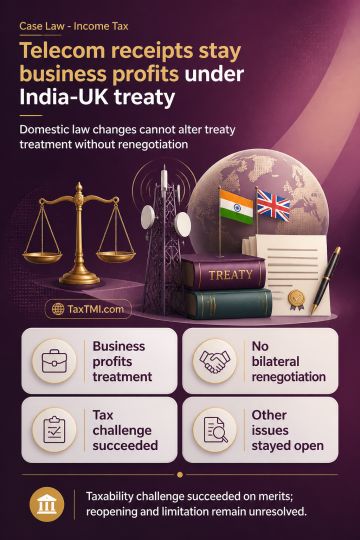
India-UK treaty characterisation of telecom-service receipts as business profits withstands unilateral domestic-law amendments for Indian tax purposes...
Page of 4865
Press 'Enter' after typing page number.
1 to 20 of 97291 Results
❮
❯
❯❯
0 / 200
Expand Note
Add to Folder
No Folders have been created
+
Are you sure you want to delete "My most important" ?
The HC dismissed the petition challenging the constitutional validity of Section 16(2)(c) and Rule 36(4) of the GST Act and Rules, 2017. The court relied on prior Division Bench decisions of the Kerala HC and Madras HC, which upheld these provisions. The Kerala HC held that the conditions imposed on purchasing dealers to avail benefits are not discriminatory under Article 14 but are legitimate regulatory requirements. Similarly, the Madras HC upheld Rule 36(4) as constitutionally valid. Given these authoritative precedents, the court found no grounds to interfere and dismissed the petition, affirming the validity of the contested statutory provisions.
The HC dismissed the petition challenging the constitutional validity of Section 16(2)(c) and Rule 36(4) of the GST Act and Rules, 2017. The court relied on prior Division Bench decisions of the Kerala HC and Madras HC, which upheld these provisions. The Kerala HC held that the conditions imposed on purchasing dealers to avail benefits are not discriminatory under Article 14 but are legitimate regulatory requirements. Similarly, the Madras HC upheld Rule 36(4) as constitutionally valid. Given these authoritative precedents, the court found no grounds to interfere and dismissed the petition, affirming the validity of the contested statutory provisions.
Note: It is a system-generated summary and is for quick reference only.
 TaxTMI
  TaxTMI