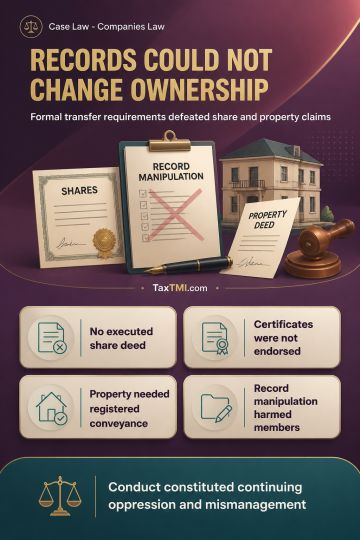
Statutory transfer formalities invalidated alleged share and property transfers, while retrospective record manipulation constituted oppression and mi...
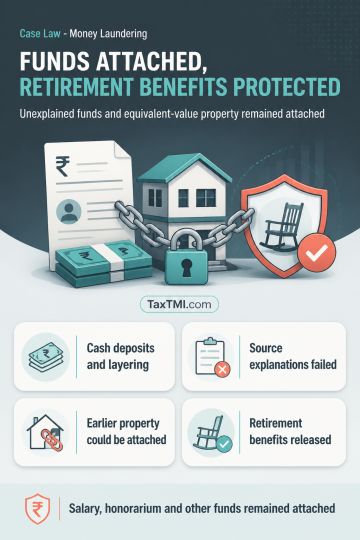
Provisional attachment of laundered funds and equivalent-value property sustained, with statutory protection limited to pension, gratuity and providen...
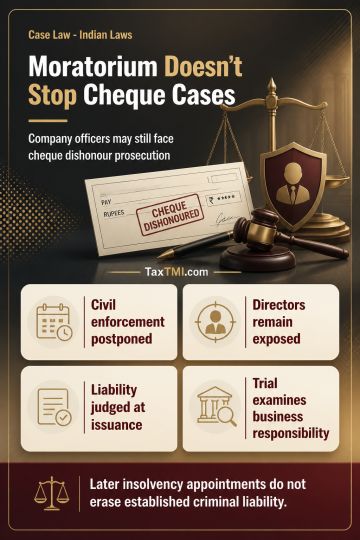
Insolvency moratorium does not shield company officers from cheque dishonour prosecution for liability arising before corporate insolvency proceedings...
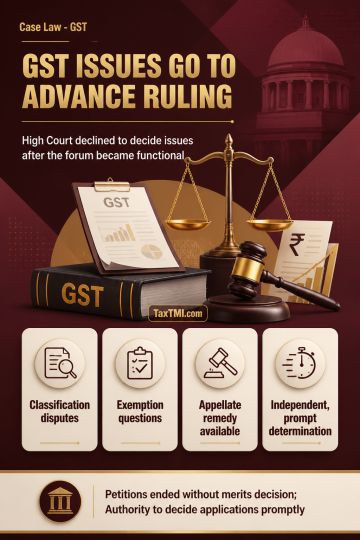
Advance-ruling mechanism governs pending GST classification, exemption and taxability disputes, limiting writ review once the specialised forum functi...
Page of 4805
Press 'Enter' after typing page number.
921 to 940 of 96092 Results
❮
❯
❯❯
0 / 200
Expand Note
Add to Folder
No Folders have been created
+
Are you sure you want to delete "My most important" ?
The AAR held that the applicant's supply does not constitute a "pure service" as defined under Notification No. 12/2017-Central Tax (Rate) dated 28.06.2017, since the consideration received included both the procurement value of goods and service charges without segregation. The applicant failed to satisfy clause (d) of the relevant explanation, which requires distinct treatment of procurement costs separate from service charges to qualify as a pure agent. Consequently, the supply cannot be classified as a pure service, rendering the applicant ineligible for the exemption under Sl. No. 3 of the said notification. The ruling confirms that when goods and services are bundled without clear separation of values, the exemption for pure services does not apply.
The AAR held that the applicant's supply does not constitute a "pure service" as defined under Notification No. 12/2017-Central Tax (Rate) dated 28.06.2017, since the consideration received included both the procurement value of goods and service charges without segregation. The applicant failed to satisfy clause (d) of the relevant explanation, which requires distinct treatment of procurement costs separate from service charges to qualify as a pure agent. Consequently, the supply cannot be classified as a pure service, rendering the applicant ineligible for the exemption under Sl. No. 3 of the said notification. The ruling confirms that when goods and services are bundled without clear separation of values, the exemption for pure services does not apply.
Note: It is a system-generated summary and is for quick reference only.
 TaxTMI
 of 4805





 Join Channel


 TaxTMI