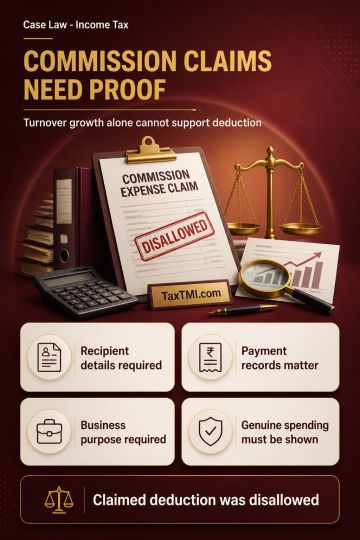
Business expenditure deduction requires proof of genuine commission payments and commercial allowability; turnover growth alone cannot validate the cl...
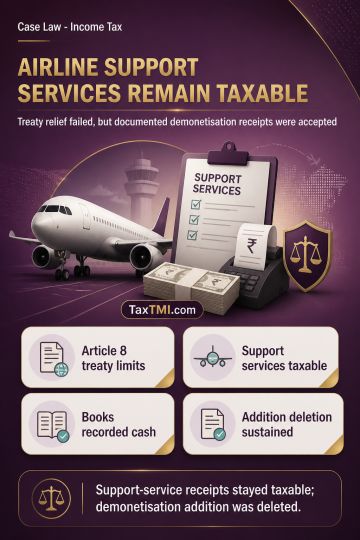
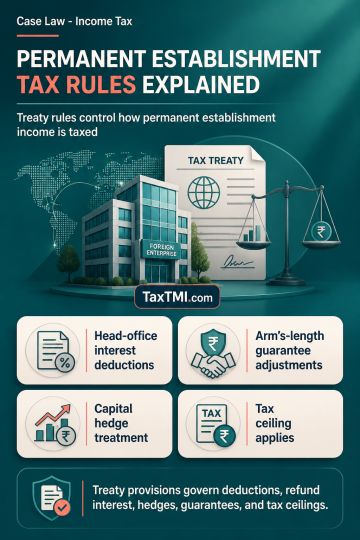
Article 8 treaty coverage excluded third-party airline support services, while documented demonetisation cash receipts remained accepted business inco...
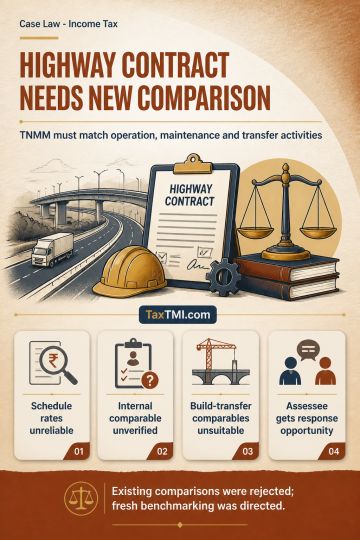
Functional comparability under TNMM requires highway contract benchmarks to reflect operation, maintenance and transfer activities, requiring fresh be...
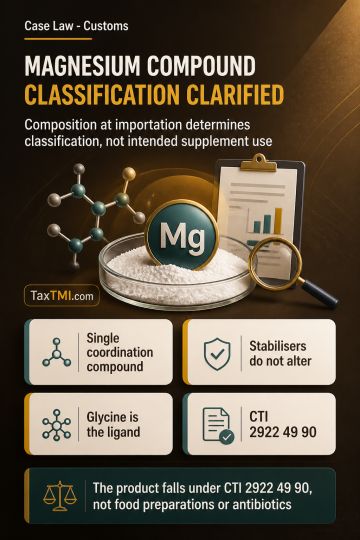
Objective characteristics govern magnesium bis-glycinate chelate classification as an amino-acid coordination compound, not a food preparation or anti...
Page of 4803
Press 'Enter' after typing page number.
581 to 600 of 96046 Results
❮
❯
❯❯
0 / 200
Expand Note
Add to Folder
No Folders have been created
+
Are you sure you want to delete "My most important" ?
The AAR held that the applicant's supply does not constitute a "pure service" as defined under Notification No. 12/2017-Central Tax (Rate) dated 28.06.2017, since the consideration received included both the procurement value of goods and service charges without segregation. The applicant failed to satisfy clause (d) of the relevant explanation, which requires distinct treatment of procurement costs separate from service charges to qualify as a pure agent. Consequently, the supply cannot be classified as a pure service, rendering the applicant ineligible for the exemption under Sl. No. 3 of the said notification. The ruling confirms that when goods and services are bundled without clear separation of values, the exemption for pure services does not apply.
The AAR held that the applicant's supply does not constitute a "pure service" as defined under Notification No. 12/2017-Central Tax (Rate) dated 28.06.2017, since the consideration received included both the procurement value of goods and service charges without segregation. The applicant failed to satisfy clause (d) of the relevant explanation, which requires distinct treatment of procurement costs separate from service charges to qualify as a pure agent. Consequently, the supply cannot be classified as a pure service, rendering the applicant ineligible for the exemption under Sl. No. 3 of the said notification. The ruling confirms that when goods and services are bundled without clear separation of values, the exemption for pure services does not apply.
Note: It is a system-generated summary and is for quick reference only.
 TaxTMI
 of 4803



 Join Channel


 TaxTMI