Mutual fund maturity rules require proper rollover, redemption, disclosure, and due diligence; investor gains cannot excuse regulatory breaches or pen...
Threshold exemption excludes exempt services, while stamp-paper purchases avoid reverse charge; consequential service tax penalties were also set asid...
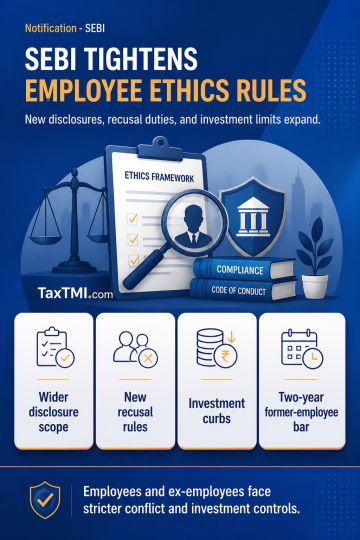
Employee conflict disclosures and investment restrictions expand with new recusal duties, post-employment limits, and compliance reporting requirement...
The HC dismissed the challenge to the vires of Sections 69 and 132 of the CGST Act, 2017, which confer power to arrest and prescribe punishment, holding that the contention lacked merit in light of the recent Supreme Court decision in Radhika Agarwal v. Union of India. The SC upheld the constitutional validity of these provisions, affirming that Article 246A grants Parliament exclusive legislative competence over GST, including anti-evasion measures. Consequently, the HC found no violation of Articles 14, 20, or 21 of the Constitution and rejected the petitions contesting the legality of Sections 69 and 132. All related writ petitions were disposed of accordingly, with the application being dismissed.
The HC dismissed the challenge to the vires of Sections 69 and 132 of the CGST Act, 2017, which confer power to arrest and prescribe punishment, holding that the contention lacked merit in light of the recent Supreme Court decision in Radhika Agarwal v. Union of India. The SC upheld the constitutional validity of these provisions, affirming that Article 246A grants Parliament exclusive legislative competence over GST, including anti-evasion measures. Consequently, the HC found no violation of Articles 14, 20, or 21 of the Constitution and rejected the petitions contesting the legality of Sections 69 and 132. All related writ petitions were disposed of accordingly, with the application being dismissed.
Note: It is a system-generated summary and is for quick reference only.
 TaxTMI
 of 4805











 Join Channel


 TaxTMI