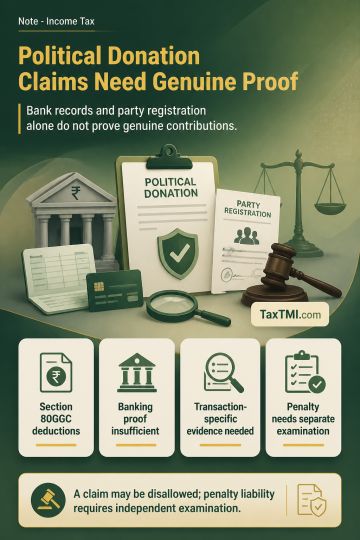
Political contribution deductions require genuine transactions; banking records and party registration alone cannot defeat evidence of accommodation e...
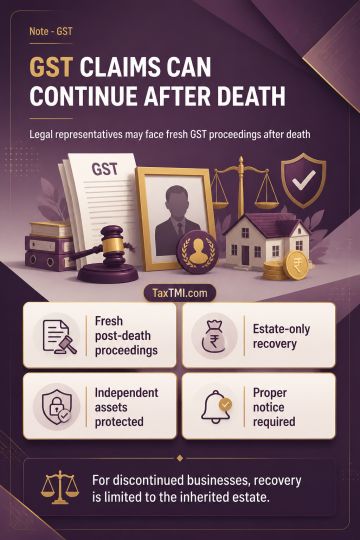
Post-death GST liability permits fresh proceedings against legal representatives, while discontinued-business recovery remains limited to the inherite...
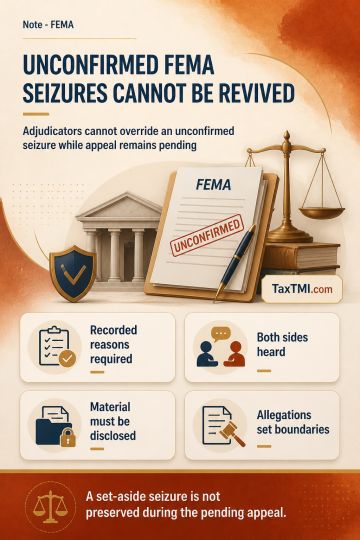
Non-confirmation of FEMA seizure prevents adjudicators from overriding pending appellate findings on recorded reasons and suspected foreign asset hold...
The HC dismissed the challenge to the vires of Sections 69 and 132 of the CGST Act, 2017, which confer power to arrest and prescribe punishment, holding that the contention lacked merit in light of the recent Supreme Court decision in Radhika Agarwal v. Union of India. The SC upheld the constitutional validity of these provisions, affirming that Article 246A grants Parliament exclusive legislative competence over GST, including anti-evasion measures. Consequently, the HC found no violation of Articles 14, 20, or 21 of the Constitution and rejected the petitions contesting the legality of Sections 69 and 132. All related writ petitions were disposed of accordingly, with the application being dismissed.
The HC dismissed the challenge to the vires of Sections 69 and 132 of the CGST Act, 2017, which confer power to arrest and prescribe punishment, holding that the contention lacked merit in light of the recent Supreme Court decision in Radhika Agarwal v. Union of India. The SC upheld the constitutional validity of these provisions, affirming that Article 246A grants Parliament exclusive legislative competence over GST, including anti-evasion measures. Consequently, the HC found no violation of Articles 14, 20, or 21 of the Constitution and rejected the petitions contesting the legality of Sections 69 and 132. All related writ petitions were disposed of accordingly, with the application being dismissed.
Note: It is a system-generated summary and is for quick reference only.
 TaxTMI
  TaxTMI