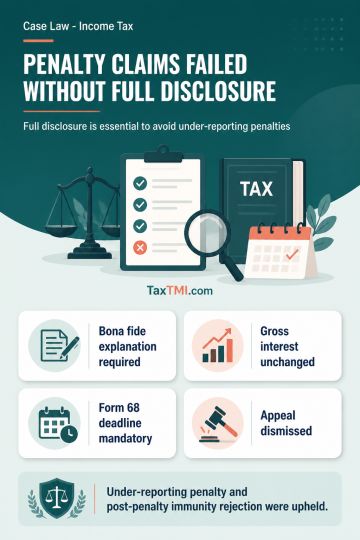
Bona fide disclosure requirements govern under-reporting penalties, and post-penalty immunity applications cannot secure available statutory protectio...
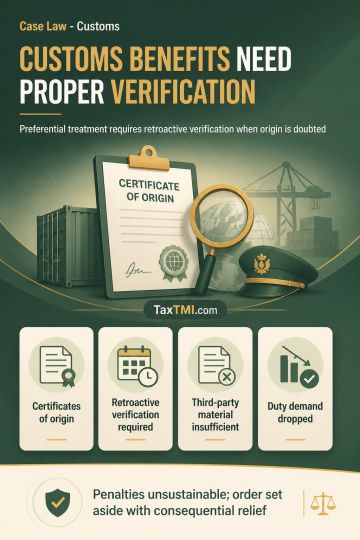
Certificate-of-origin verification procedure governs preferential customs benefits; denial without retroactive verification was set aside with consequ...
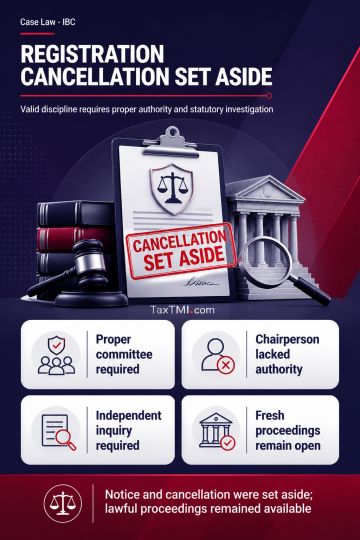
Disciplinary Committee jurisdiction and mandatory investigation requirements invalidated cancellation of an insolvency professional's registration and...
The HC dismissed the challenge to the vires of Sections 69 and 132 of the CGST Act, 2017, which confer power to arrest and prescribe punishment, holding that the contention lacked merit in light of the recent Supreme Court decision in Radhika Agarwal v. Union of India. The SC upheld the constitutional validity of these provisions, affirming that Article 246A grants Parliament exclusive legislative competence over GST, including anti-evasion measures. Consequently, the HC found no violation of Articles 14, 20, or 21 of the Constitution and rejected the petitions contesting the legality of Sections 69 and 132. All related writ petitions were disposed of accordingly, with the application being dismissed.
The HC dismissed the challenge to the vires of Sections 69 and 132 of the CGST Act, 2017, which confer power to arrest and prescribe punishment, holding that the contention lacked merit in light of the recent Supreme Court decision in Radhika Agarwal v. Union of India. The SC upheld the constitutional validity of these provisions, affirming that Article 246A grants Parliament exclusive legislative competence over GST, including anti-evasion measures. Consequently, the HC found no violation of Articles 14, 20, or 21 of the Constitution and rejected the petitions contesting the legality of Sections 69 and 132. All related writ petitions were disposed of accordingly, with the application being dismissed.
Note: It is a system-generated summary and is for quick reference only.
 TaxTMI
 of 4805






 Join Channel


 TaxTMI
