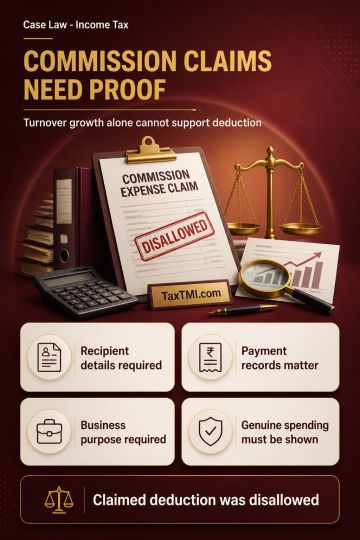
Business expenditure deduction requires proof of genuine commission payments and commercial allowability; turnover growth alone cannot validate the cl...
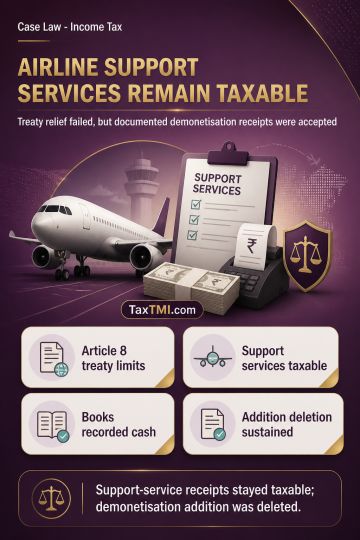
Article 8 treaty coverage excluded third-party airline support services, while documented demonetisation cash receipts remained accepted business inco...
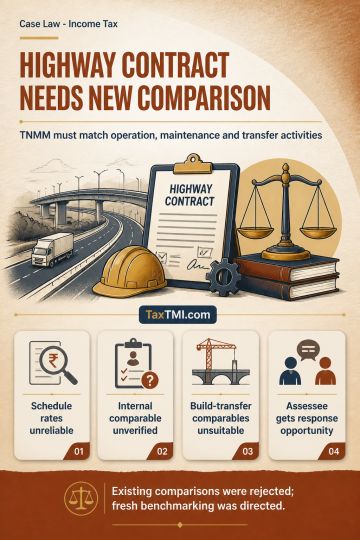
Functional comparability under TNMM requires highway contract benchmarks to reflect operation, maintenance and transfer activities, requiring fresh be...
The SC allowed the appeal, setting aside the High Court's order that had disallowed the amendment of a complaint under Section 200 Cr.P.C. post-cognizance. The Court held that the criminal court possesses the power to permit amendments addressing curable infirmities in a complaint, provided no prejudice is caused to the accused. Here, the amendment corrected an inadvertent error concerning the product description without altering the complaint's nature or character. Since the amendment occurred before the trial's conclusion and did not prejudice the respondents, the Trial Court rightly allowed it. The High Court erred by considering extraneous issues like GST leviability, which fall outside the criminal trial's scope. The final determination of the amendment's impact on liability is reserved for the Trial Court based on evidence. Consequently, the appeal was allowed, reinstating the Trial Court's order permitting the amendment.
The SC allowed the appeal, setting aside the High Court's order that had disallowed the amendment of a complaint under Section 200 Cr.P.C. post-cognizance. The Court held that the criminal court possesses the power to permit amendments addressing curable infirmities in a complaint, provided no prejudice is caused to the accused. Here, the amendment corrected an inadvertent error concerning the product description without altering the complaint's nature or character. Since the amendment occurred before the trial's conclusion and did not prejudice the respondents, the Trial Court rightly allowed it. The High Court erred by considering extraneous issues like GST leviability, which fall outside the criminal trial's scope. The final determination of the amendment's impact on liability is reserved for the Trial Court based on evidence. Consequently, the appeal was allowed, reinstating the Trial Court's order permitting the amendment.
Note: It is a system-generated summary and is for quick reference only.
 TaxTMI
 of 4792




 Join Channel


 TaxTMI
