Transaction value rejection requires reliable corroboration; refundable VAT is excluded and temporary registration does not defeat new-vehicle exempti...
Appellate jurisdiction remains available where a wrist-worn gold ornament cannot conclusively be characterised as imported baggage at the preliminary ...
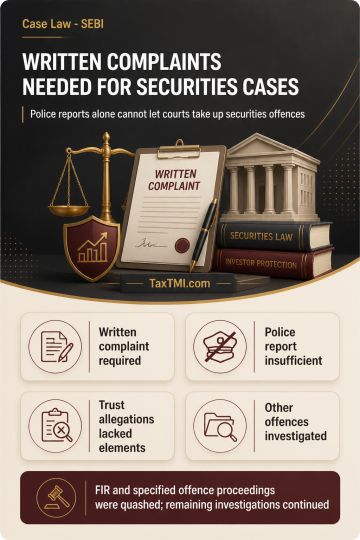
Written complaint requirement bars cognizance on police reports for securities offences, while unsupported breach of trust and cheating allegations fa...
Risk-based postal import clearance standardises electronic assessment, document requests, duty realisation and delivery controls at Foreign Post Offic...
Customs Cargo Service Provider appointment extends custodianship to additional terminal land, subject to cargo-control, security and licence condition...
The SC allowed the appeal, setting aside the High Court's order that had disallowed the amendment of a complaint under Section 200 Cr.P.C. post-cognizance. The Court held that the criminal court possesses the power to permit amendments addressing curable infirmities in a complaint, provided no prejudice is caused to the accused. Here, the amendment corrected an inadvertent error concerning the product description without altering the complaint's nature or character. Since the amendment occurred before the trial's conclusion and did not prejudice the respondents, the Trial Court rightly allowed it. The High Court erred by considering extraneous issues like GST leviability, which fall outside the criminal trial's scope. The final determination of the amendment's impact on liability is reserved for the Trial Court based on evidence. Consequently, the appeal was allowed, reinstating the Trial Court's order permitting the amendment.
The SC allowed the appeal, setting aside the High Court's order that had disallowed the amendment of a complaint under Section 200 Cr.P.C. post-cognizance. The Court held that the criminal court possesses the power to permit amendments addressing curable infirmities in a complaint, provided no prejudice is caused to the accused. Here, the amendment corrected an inadvertent error concerning the product description without altering the complaint's nature or character. Since the amendment occurred before the trial's conclusion and did not prejudice the respondents, the Trial Court rightly allowed it. The High Court erred by considering extraneous issues like GST leviability, which fall outside the criminal trial's scope. The final determination of the amendment's impact on liability is reserved for the Trial Court based on evidence. Consequently, the appeal was allowed, reinstating the Trial Court's order permitting the amendment.
Note: It is a system-generated summary and is for quick reference only.
 TaxTMI
 of 4792








 Join Channel


 TaxTMI