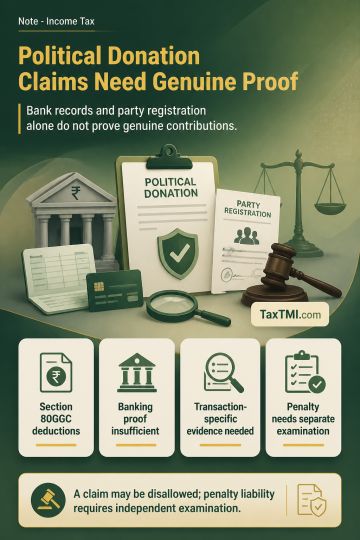
Political contribution deductions require genuine transactions; banking records and party registration alone cannot defeat evidence of accommodation e...
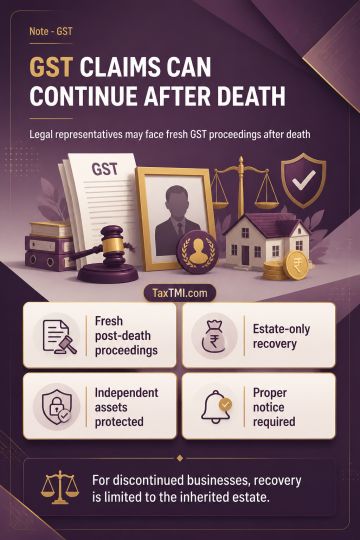
Post-death GST liability permits fresh proceedings against legal representatives, while discontinued-business recovery remains limited to the inherite...
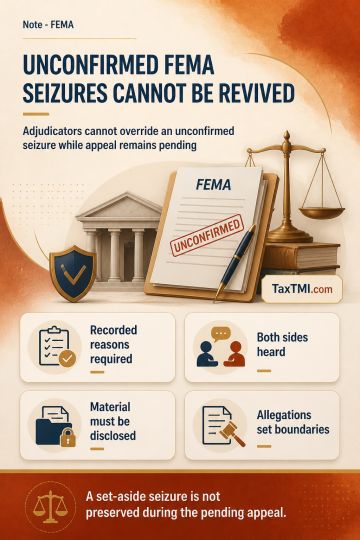
Non-confirmation of FEMA seizure prevents adjudicators from overriding pending appellate findings on recorded reasons and suspected foreign asset hold...
The HC held that a dissolved company remains liable for offences committed prior to dissolution, as per Section 250 of the Companies Act and Sections 70 and 71 of the PMLA Act. Such a company can be prosecuted by restoring it under Section 305 Cr.P.C or, if restoration is not feasible, by prosecuting a director or authorized representative as its representative. The court affirmed that designating a director as the representative of the dissolved company in criminal proceedings under Sections 420, 120B IPC, and Sections 13(2), 13(1)(d) Prevention of Corruption Act is justified in the interest of justice. The petition challenging the order refusing to remove the petitioner as the company's representative was dismissed, confirming the Special Court's decision and upholding the prosecution's approach to ensure accountability despite the company's dissolution.
The HC held that a dissolved company remains liable for offences committed prior to dissolution, as per Section 250 of the Companies Act and Sections 70 and 71 of the PMLA Act. Such a company can be prosecuted by restoring it under Section 305 Cr.P.C or, if restoration is not feasible, by prosecuting a director or authorized representative as its representative. The court affirmed that designating a director as the representative of the dissolved company in criminal proceedings under Sections 420, 120B IPC, and Sections 13(2), 13(1)(d) Prevention of Corruption Act is justified in the interest of justice. The petition challenging the order refusing to remove the petitioner as the company's representative was dismissed, confirming the Special Court's decision and upholding the prosecution's approach to ensure accountability despite the company's dissolution.
Note: It is a system-generated summary and is for quick reference only.
 TaxTMI
  TaxTMI