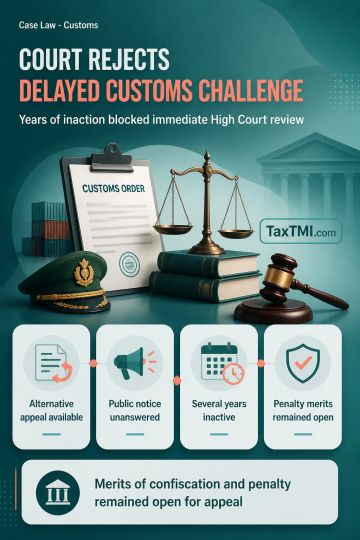
Alternative statutory remedy and unexplained delay barred writ review of customs confiscation adjudication, leaving merits for appellate consideration...
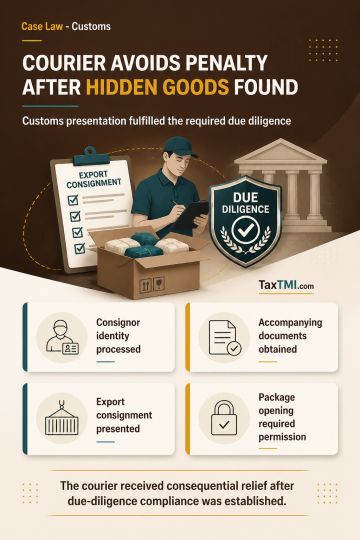
Authorised courier due diligence protects against penalties where declared exports conceal prohibited goods despite proper documentation and customs p...
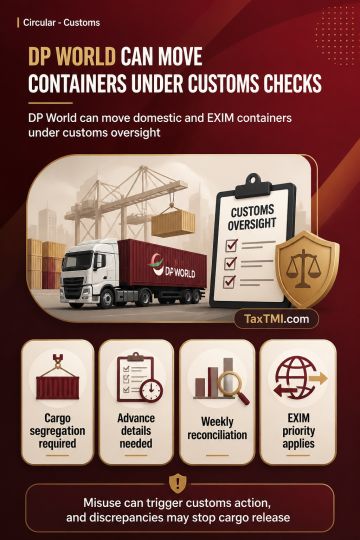
Customs-controlled container movement now extends to DP World facilities, subject to segregation, inspections, reconciliation, and EXIM cargo priority...
Effective June 1, 2025, electronic Certificates of Origin (e-CoO) issued by the Mauritius Revenue Authority under the India-Mauritius CECPA are recognized as valid for claiming preferential tariff treatment, provided they meet prescribed format, seal, signature, and notification requirements. Verification of e-CoOs includes use of specimen seals, signatures, QR codes, and an online portal. Importers or Customs Brokers must upload the e-CoO on the e-Sanchit system and accurately enter its details when filing bills of entry. For defacement, a printed copy of the e-CoO must be presented to Customs officers, who will verify details against the bill of entry; this replaces defacing original hard copies. The system prevents reuse of the same CoO reference number across multiple entries. Customs authorities are instructed to implement these procedures accordingly.
Effective June 1, 2025, electronic Certificates of Origin (e-CoO) issued by the Mauritius Revenue Authority under the India-Mauritius CECPA are recognized as valid for claiming preferential tariff treatment, provided they meet prescribed format, seal, signature, and notification requirements. Verification of e-CoOs includes use of specimen seals, signatures, QR codes, and an online portal. Importers or Customs Brokers must upload the e-CoO on the e-Sanchit system and accurately enter its details when filing bills of entry. For defacement, a printed copy of the e-CoO must be presented to Customs officers, who will verify details against the bill of entry; this replaces defacing original hard copies. The system prevents reuse of the same CoO reference number across multiple entries. Customs authorities are instructed to implement these procedures accordingly.
Note: It is a system-generated summary and is for quick reference only.
 TaxTMI
  TaxTMI
 of 4828













 Join Channel


