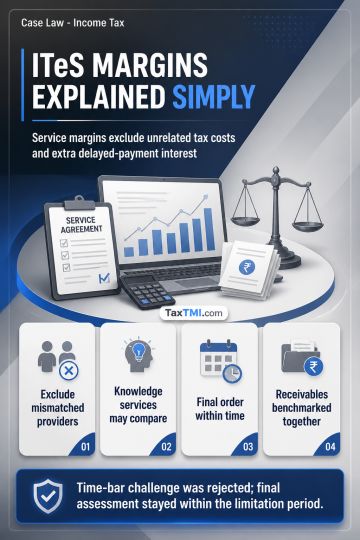
Transfer-pricing treatment of ITeS margins excludes pass-through tax recoveries and separate delayed-receivables interest after working-capital adjust...
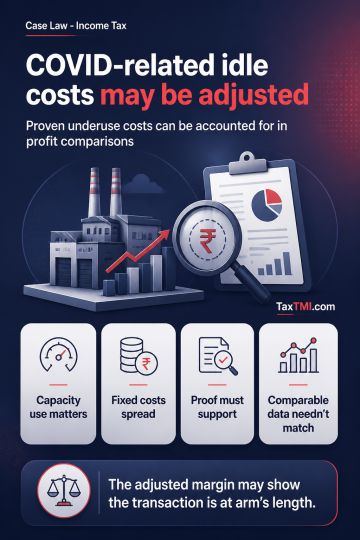
Capacity-utilisation adjustments under TNMM can neutralise substantiated COVID-related idle costs where underutilisation materially affects profitabil...
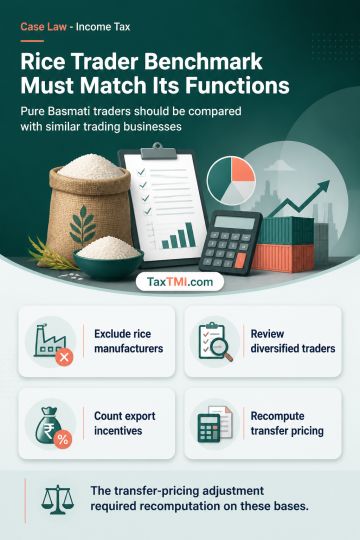
TNMM functional comparability requires excluding rice manufacturers from a pure Basmati rice trader's benchmark and recognising operating export recei...
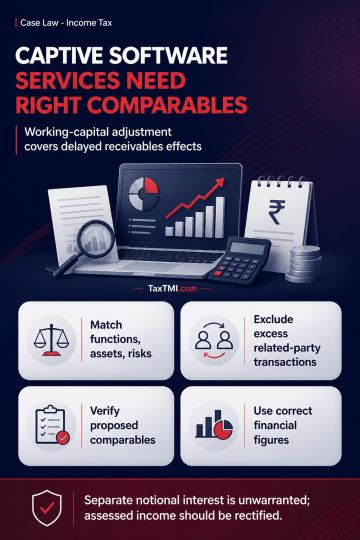
Working-capital adjustment subsumes delayed-receivable effects in TNMM benchmarking of captive software-development services, avoiding separate notion...
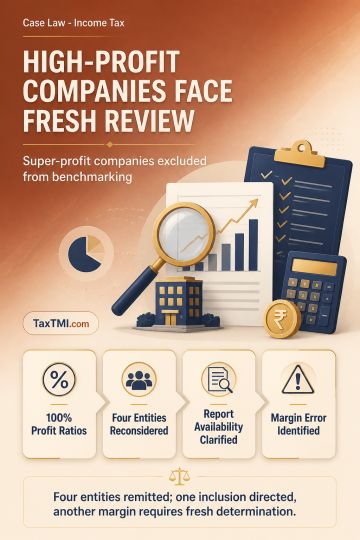
Transfer-pricing comparability requires exclusion of financially illogical super-profit comparables and correction of unsupported annual-report and ma...
Charitable character assessment preserves Section 80G approval despite inclusive spiritual teachings and incidental religious expenditure within the s...
Penalty proceedings for cash-loan acceptance require assessment proceedings and recorded Assessing Officer satisfaction; absent these, the proceedings...
Page of 4828
Press 'Enter' after typing page number.
161 to 180 of 96556 Results
❮
❯
❯❯
0 / 200
Expand Note
Add to Folder
No Folders have been created
+
Are you sure you want to delete "My most important" ?
The CESTAT allowed the appeal, setting aside the impugned order dated 28.02.2024, which had confirmed adjudged demands under the extended limitation period, imposed confiscation, redemption fine, and penalties on the appellants. The Tribunal held that the exemption notifications issued under Section 25(1) of the Customs Act, 1962, granting duty exemption on specified knee and hip implants, are general exemptions applicable without additional conditions such as use by disabled persons. The impugned goods fall within the scope of the exemption as per the description in List-30 and related notifications, covering orthopedic appliances and implants. The classification and interpretation of the exemption were found consistent with the statutory provisions and trade parlance, rendering the demand, confiscation, and penalties legally unsustainable. Consequently, the appeal was allowed, and all imposed duties, fines, and penalties were set aside.
The CESTAT allowed the appeal, setting aside the impugned order dated 28.02.2024, which had confirmed adjudged demands under the extended limitation period, imposed confiscation, redemption fine, and penalties on the appellants. The Tribunal held that the exemption notifications issued under Section 25(1) of the Customs Act, 1962, granting duty exemption on specified knee and hip implants, are general exemptions applicable without additional conditions such as use by disabled persons. The impugned goods fall within the scope of the exemption as per the description in List-30 and related notifications, covering orthopedic appliances and implants. The classification and interpretation of the exemption were found consistent with the statutory provisions and trade parlance, rendering the demand, confiscation, and penalties legally unsustainable. Consequently, the appeal was allowed, and all imposed duties, fines, and penalties were set aside.
Note: It is a system-generated summary and is for quick reference only.
 TaxTMI
  TaxTMI
 of 4828








 Join Channel