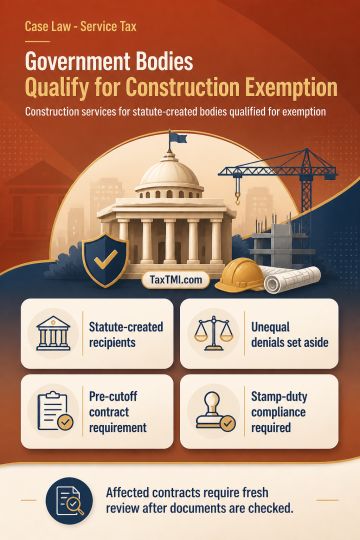
Governmental authority status supports construction-service exemption, while pre-cutoff contract and stamp-duty compliance requires verification on re...
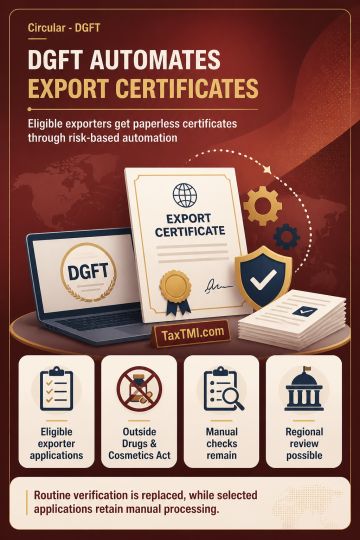
Automated Free Sale and Commerce Certificates enable paperless processing while retaining risk-based manual verification for selected exporter applica...
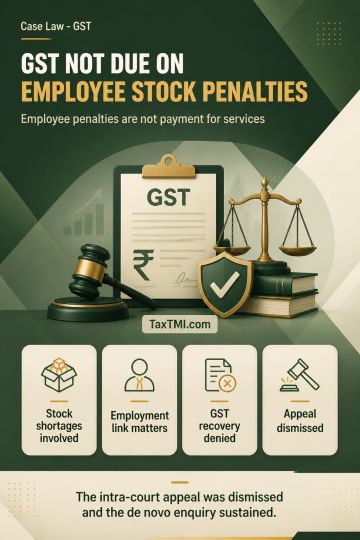
Employee stock-shortage penalties do not constitute consideration for services, preventing GST collection under Schedule II in employment relationship...
The CESTAT allowed the appeal, setting aside the impugned order dated 28.02.2024, which had confirmed adjudged demands under the extended limitation period, imposed confiscation, redemption fine, and penalties on the appellants. The Tribunal held that the exemption notifications issued under Section 25(1) of the Customs Act, 1962, granting duty exemption on specified knee and hip implants, are general exemptions applicable without additional conditions such as use by disabled persons. The impugned goods fall within the scope of the exemption as per the description in List-30 and related notifications, covering orthopedic appliances and implants. The classification and interpretation of the exemption were found consistent with the statutory provisions and trade parlance, rendering the demand, confiscation, and penalties legally unsustainable. Consequently, the appeal was allowed, and all imposed duties, fines, and penalties were set aside.
The CESTAT allowed the appeal, setting aside the impugned order dated 28.02.2024, which had confirmed adjudged demands under the extended limitation period, imposed confiscation, redemption fine, and penalties on the appellants. The Tribunal held that the exemption notifications issued under Section 25(1) of the Customs Act, 1962, granting duty exemption on specified knee and hip implants, are general exemptions applicable without additional conditions such as use by disabled persons. The impugned goods fall within the scope of the exemption as per the description in List-30 and related notifications, covering orthopedic appliances and implants. The classification and interpretation of the exemption were found consistent with the statutory provisions and trade parlance, rendering the demand, confiscation, and penalties legally unsustainable. Consequently, the appeal was allowed, and all imposed duties, fines, and penalties were set aside.
Note: It is a system-generated summary and is for quick reference only.
 TaxTMI
  TaxTMI
 of 4828








 Join Channel


