Transfer pricing and tax deductions upheld on established principles, while employee contributions and warranty provisions returned for fresh examinat...
Captive transfer pricing relies on industrial consumer tariffs, while genuine quotations can benchmark effluent treatment transfers under the Other Me...
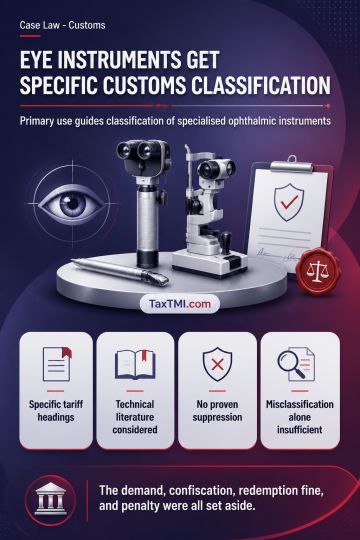
Specific tariff classification for ophthalmic instruments and extended limitation principles determine the treatment of duty demands, confiscation, an...
Integrated golf function determines classification, placing launch monitors and simulators under other golf equipment rather than measuring instrument...
Public servant status under anti-corruption law extends to recognised stock exchange leadership; constitutional and sanction challenges do not succeed...
Acquiescence, homebuyer protection and clean-slate resolution principles prevent landowners from disrupting an integrated project through late termina...
The ITAT upheld the allowability of depreciation on goodwill arising from a court-sanctioned amalgamation under section 32(1)(ii), rejecting the AO's disallowance and reliance on AS-26 and precedent. The tribunal affirmed that once depreciation is allowed, the carry-forward of unabsorbed depreciation is a vested right and cannot be denied without reversal by a competent forum, thereby dismissing the AO's disallowance of brought-forward depreciation. Product registration expenses were held to be revenue in nature and deductible under section 37(1), not capital expenditure. The claim for deduction under section 80-IC was sustained, as the Baddi Unit was found to have operational autonomy and no nexus was established to allocate corporate expenses to it. Scrap income was deemed eligible for deduction under section 80-IC, consistent with prior assessments. Finally, the enhanced income due to disallowance under section 40(a)(ia) was held eligible for deduction under section 80-IC. All revenue appeals were dismissed.
The ITAT upheld the allowability of depreciation on goodwill arising from a court-sanctioned amalgamation under section 32(1)(ii), rejecting the AO's disallowance and reliance on AS-26 and precedent. The tribunal affirmed that once depreciation is allowed, the carry-forward of unabsorbed depreciation is a vested right and cannot be denied without reversal by a competent forum, thereby dismissing the AO's disallowance of brought-forward depreciation. Product registration expenses were held to be revenue in nature and deductible under section 37(1), not capital expenditure. The claim for deduction under section 80-IC was sustained, as the Baddi Unit was found to have operational autonomy and no nexus was established to allocate corporate expenses to it. Scrap income was deemed eligible for deduction under section 80-IC, consistent with prior assessments. Finally, the enhanced income due to disallowance under section 40(a)(ia) was held eligible for deduction under section 80-IC. All revenue appeals were dismissed.
Note: It is a system-generated summary and is for quick reference only.
 TaxTMI
 of 4803


















 Join Channel


 TaxTMI