Rectification of mistake remains limited to self-evident record errors, preventing merits review through miscellaneous applications and preserving fin...
Tender creditworthiness conditions may extend to de facto Promoter Directors, with post-participation challenges generally barred absent arbitrariness...
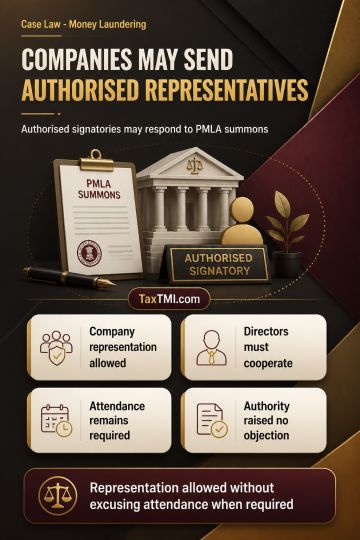
Corporate representation in PMLA summons proceedings permitted through an authorised signatory, subject to directors' continuing cooperation and atten...
Helicopter charter classification requires effective control analysis, while territorial performance, reasoned credit orders and wilful suppression de...
Specified fund definition expands PAN exemption eligibility for registered alternative investment funds and qualifying International Financial Service...
Page of 4794
Press 'Enter' after typing page number.
741 to 760 of 95875 Results
❮
❯
❯❯
0 / 200
Expand Note
Add to Folder
No Folders have been created
+
Are you sure you want to delete "My most important" ?
The NCLAT upheld the Adjudicating Authority's finding that the Resolution Plan submitted by the appellant, approved by the CoC with an 80.13% vote share, did not violate Section 30(2) of the IBC. However, the Adjudicating Authority identified non-compliance with the CIRP Regulations, 2016 by the Resolution Professional and issued remedial directions, including a fresh valuation. The Tribunal modified interim orders to permit the Resolution Professional to conduct transaction audits and valuations. The appellant, as a successful resolution applicant, remains entitled to submit a resolution plan upon the CoC's issuance of a fresh Request for Resolution Plan. The appeal was disposed of accordingly, affirming the appellant's right to participate in the CIRP process while ensuring regulatory compliance through remedial measures.
The NCLAT upheld the Adjudicating Authority's finding that the Resolution Plan submitted by the appellant, approved by the CoC with an 80.13% vote share, did not violate Section 30(2) of the IBC. However, the Adjudicating Authority identified non-compliance with the CIRP Regulations, 2016 by the Resolution Professional and issued remedial directions, including a fresh valuation. The Tribunal modified interim orders to permit the Resolution Professional to conduct transaction audits and valuations. The appellant, as a successful resolution applicant, remains entitled to submit a resolution plan upon the CoC's issuance of a fresh Request for Resolution Plan. The appeal was disposed of accordingly, affirming the appellant's right to participate in the CIRP process while ensuring regulatory compliance through remedial measures.
Note: It is a system-generated summary and is for quick reference only.
 TaxTMI
 of 4794
















 Join Channel


 TaxTMI