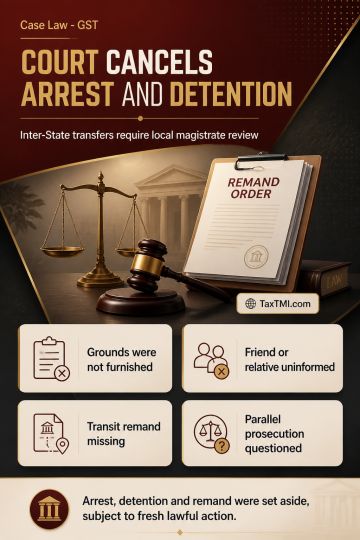
Arrest safeguards and transit remand requirements invalidated detention following inter-State transfer without communicated grounds or magistrate auth...
Arrest safeguards require disclosed grounds, relative intimation and transit remand, while duplicate prosecution under the CGST framework is unsustain...
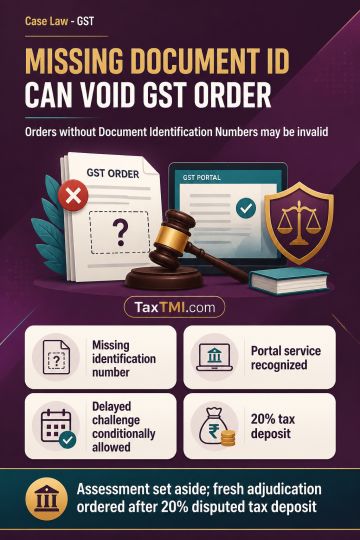
Document Identification Number defects can invalidate GST assessments, with delayed challenges entertained conditionally where patent irregularities e...
Windmill commissioning evidence supported higher depreciation where grid connection and electricity generation proved operational use before the relev...
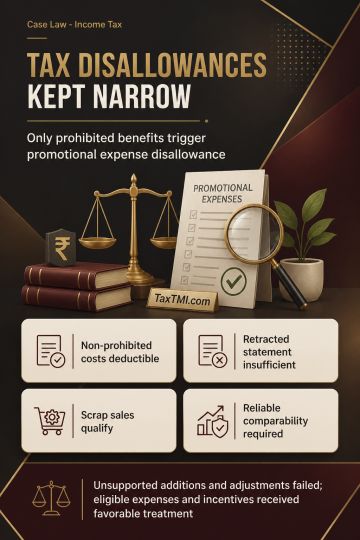
Pharmaceutical promotion and transfer-pricing comparability principles limited disallowances, while uncorroborated search allegations and unsupported ...
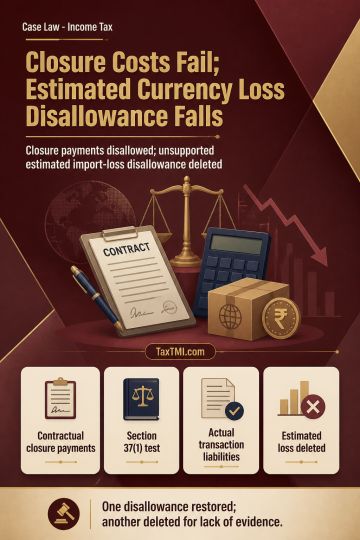
Business expenditure substantiation supports scrap credits, statutory payments and expense claims, while depreciation requires proof of actual busines...
The NCLAT upheld the Adjudicating Authority's finding that the Resolution Plan submitted by the appellant, approved by the CoC with an 80.13% vote share, did not violate Section 30(2) of the IBC. However, the Adjudicating Authority identified non-compliance with the CIRP Regulations, 2016 by the Resolution Professional and issued remedial directions, including a fresh valuation. The Tribunal modified interim orders to permit the Resolution Professional to conduct transaction audits and valuations. The appellant, as a successful resolution applicant, remains entitled to submit a resolution plan upon the CoC's issuance of a fresh Request for Resolution Plan. The appeal was disposed of accordingly, affirming the appellant's right to participate in the CIRP process while ensuring regulatory compliance through remedial measures.
The NCLAT upheld the Adjudicating Authority's finding that the Resolution Plan submitted by the appellant, approved by the CoC with an 80.13% vote share, did not violate Section 30(2) of the IBC. However, the Adjudicating Authority identified non-compliance with the CIRP Regulations, 2016 by the Resolution Professional and issued remedial directions, including a fresh valuation. The Tribunal modified interim orders to permit the Resolution Professional to conduct transaction audits and valuations. The appellant, as a successful resolution applicant, remains entitled to submit a resolution plan upon the CoC's issuance of a fresh Request for Resolution Plan. The appeal was disposed of accordingly, affirming the appellant's right to participate in the CIRP process while ensuring regulatory compliance through remedial measures.
Note: It is a system-generated summary and is for quick reference only.
 TaxTMI
 of 4792













 Join Channel


 TaxTMI