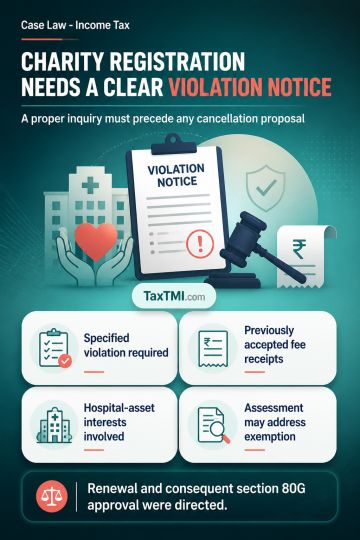
Charitable trust registration requires a specified-violation notice; settled cash deposits and related-party payments did not justify cancellation or ...
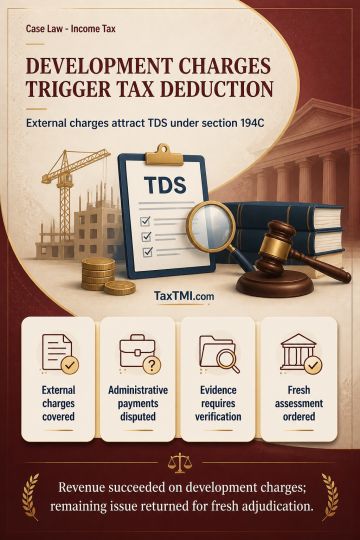
External development charges trigger TDS under section 194C, while disputed administrative payments require factual verification and fresh adjudicatio...
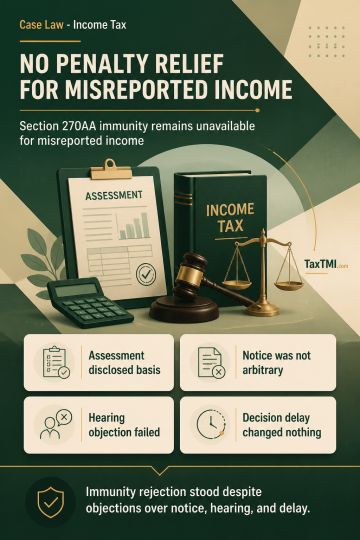
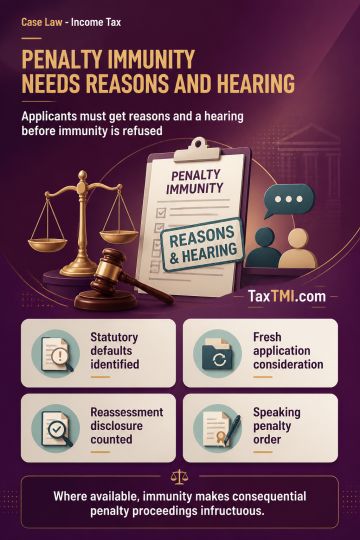
Section 270AA penalty immunity requires identified statutory defaults and a hearing before rejection; reassessment disclosure may constitute under-rep...
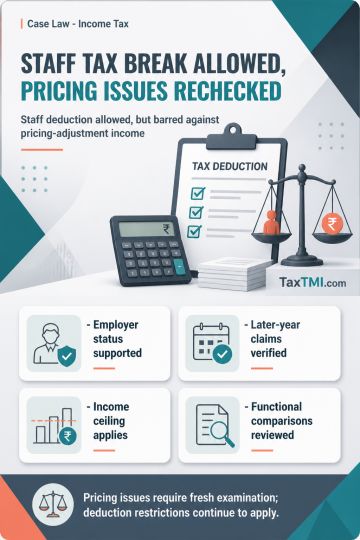
Section 80JJAA employee-cost deduction allowed for deployed staff but barred against transfer-pricing income enhancement, with pricing issues remanded...
Page of 4830
Press 'Enter' after typing page number.
141 to 160 of 96587 Results
❮
❯
❯❯
0 / 200
Expand Note
Add to Folder
No Folders have been created
+
Are you sure you want to delete "My most important" ?
The HC quashed the impugned show cause notices issued under the Companies Act, 2013, against the petitioner company, which had been sold as a going concern by the liquidator under the IBC Regulations. The Court held that liquidation results in the civil death of the original company, with only its corporate identity continuing under new management, thereby granting a "clean slate." Criminal liability for pre-liquidation offences does not extend to the new management, except for persons involved in the day-to-day operations prior to CIRP commencement. The Court observed that further prosecution would undermine the purpose of protection afforded to the new management post-liquidation. Despite multiple replies to notices, the first respondent persisted with show cause notices, which appeared to serve prosecutorial ends rather than genuine inquiry. Consequently, the Court allowed the writ petitions and quashed the show cause notices dated 11.11.2024.
The HC quashed the impugned show cause notices issued under the Companies Act, 2013, against the petitioner company, which had been sold as a going concern by the liquidator under the IBC Regulations. The Court held that liquidation results in the civil death of the original company, with only its corporate identity continuing under new management, thereby granting a "clean slate." Criminal liability for pre-liquidation offences does not extend to the new management, except for persons involved in the day-to-day operations prior to CIRP commencement. The Court observed that further prosecution would undermine the purpose of protection afforded to the new management post-liquidation. Despite multiple replies to notices, the first respondent persisted with show cause notices, which appeared to serve prosecutorial ends rather than genuine inquiry. Consequently, the Court allowed the writ petitions and quashed the show cause notices dated 11.11.2024.
Note: It is a system-generated summary and is for quick reference only.
 TaxTMI
  TaxTMI
 of 4830










 Join Channel


