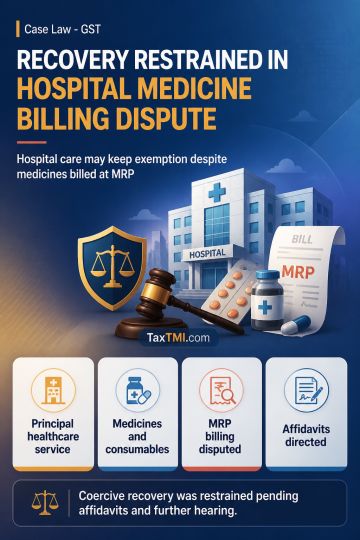
Composite inpatient healthcare supply may retain exemption despite MRP medicine billing, while separate taxable sale characterisation remains disputed...
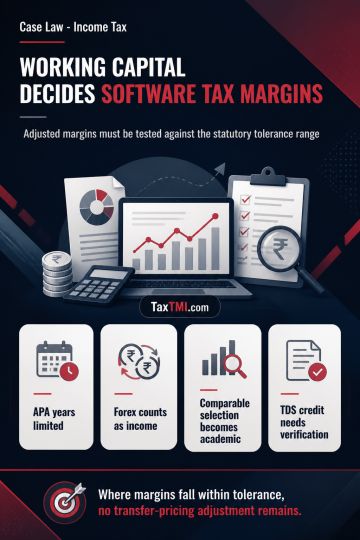
Working-capital adjustment determines whether software-services transfer-pricing margins fall within the statutory tolerance range, eliminating any ad...
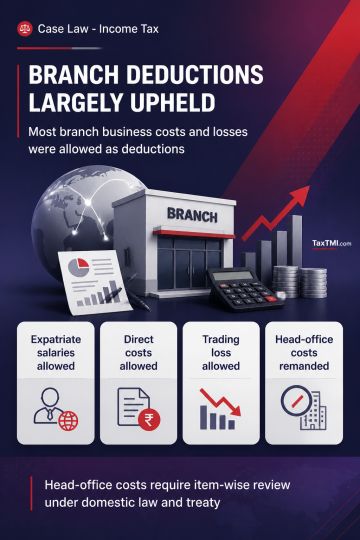
Permanent establishment deductions upheld for expatriate salaries, direct costs and trading losses, while head-office costs require fresh classificati...
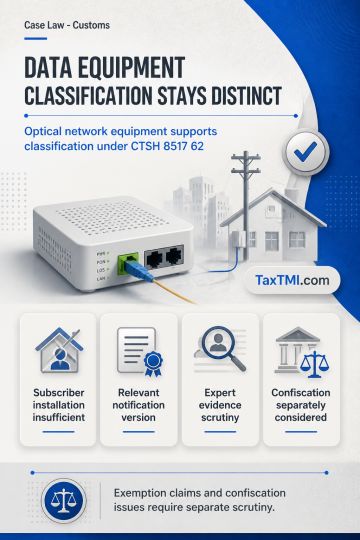
Data transmission equipment classification under CTSH 8517 62 remains distinct from residual classification, with exemption evidence requiring scrutin...
Page of 4788
Press 'Enter' after typing page number.
721 to 740 of 95749 Results
❮
❯
❯❯
0 / 200
Expand Note
Add to Folder
No Folders have been created
+
Are you sure you want to delete "My most important" ?
The HC upheld the assessee's claim for depreciation on revalued assets based on the actual cost paid to the erstwhile partners, rejecting the denial under Explanation 3 to Section 43(1). The court clarified that Rule 5 of the Income Tax Rules, 1962, limits aggregate depreciation to the actual cost of the asset, which, in this case, corresponds to the valuation agreed upon in April 1982 when the original partnership was reconstituted. Despite the dissolution of the original firm in 1984 and changes in partnership, the assessee is entitled to claim depreciation for subsequent years on the actual cost paid. The court further held that familial relationships among partners do not affect this entitlement under the Act. The questions of law were decided in favor of the assessee, affirming the right to depreciation on the revalued asset cost.
The HC upheld the assessee's claim for depreciation on revalued assets based on the actual cost paid to the erstwhile partners, rejecting the denial under Explanation 3 to Section 43(1). The court clarified that Rule 5 of the Income Tax Rules, 1962, limits aggregate depreciation to the actual cost of the asset, which, in this case, corresponds to the valuation agreed upon in April 1982 when the original partnership was reconstituted. Despite the dissolution of the original firm in 1984 and changes in partnership, the assessee is entitled to claim depreciation for subsequent years on the actual cost paid. The court further held that familial relationships among partners do not affect this entitlement under the Act. The questions of law were decided in favor of the assessee, affirming the right to depreciation on the revalued asset cost.
Note: It is a system-generated summary and is for quick reference only.
 TaxTMI
 of 4788










 Join Channel


 TaxTMI