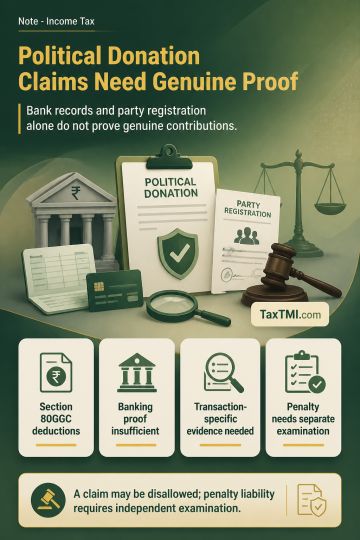
Political contribution deductions require genuine transactions; banking records and party registration alone cannot defeat evidence of accommodation e...
Post-death GST liability permits fresh proceedings against legal representatives, while discontinued-business recovery remains limited to the inherite...
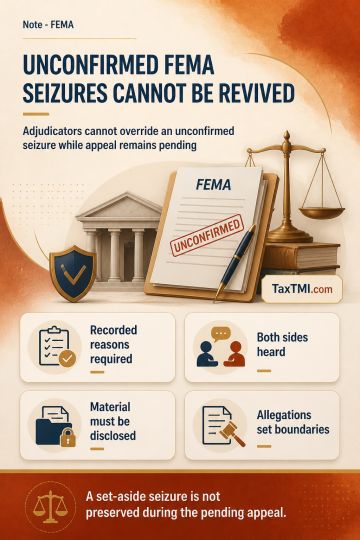
Non-confirmation of FEMA seizure prevents adjudicators from overriding pending appellate findings on recorded reasons and suspected foreign asset hold...
The HC upheld the assessee's claim for depreciation on revalued assets based on the actual cost paid to the erstwhile partners, rejecting the denial under Explanation 3 to Section 43(1). The court clarified that Rule 5 of the Income Tax Rules, 1962, limits aggregate depreciation to the actual cost of the asset, which, in this case, corresponds to the valuation agreed upon in April 1982 when the original partnership was reconstituted. Despite the dissolution of the original firm in 1984 and changes in partnership, the assessee is entitled to claim depreciation for subsequent years on the actual cost paid. The court further held that familial relationships among partners do not affect this entitlement under the Act. The questions of law were decided in favor of the assessee, affirming the right to depreciation on the revalued asset cost.
The HC upheld the assessee's claim for depreciation on revalued assets based on the actual cost paid to the erstwhile partners, rejecting the denial under Explanation 3 to Section 43(1). The court clarified that Rule 5 of the Income Tax Rules, 1962, limits aggregate depreciation to the actual cost of the asset, which, in this case, corresponds to the valuation agreed upon in April 1982 when the original partnership was reconstituted. Despite the dissolution of the original firm in 1984 and changes in partnership, the assessee is entitled to claim depreciation for subsequent years on the actual cost paid. The court further held that familial relationships among partners do not affect this entitlement under the Act. The questions of law were decided in favor of the assessee, affirming the right to depreciation on the revalued asset cost.
Note: It is a system-generated summary and is for quick reference only.
 TaxTMI
  TaxTMI