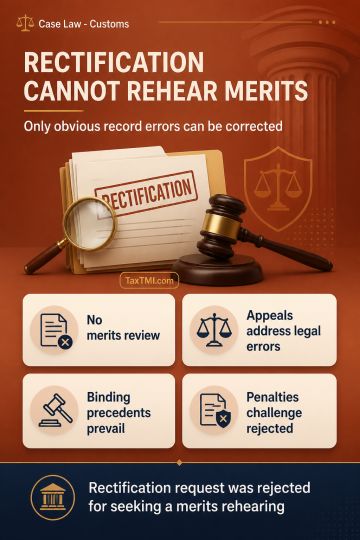
Rectification of mistake remains limited to self-evident record errors, preventing merits review through miscellaneous applications and preserving fin...
Tender creditworthiness conditions may extend to de facto Promoter Directors, with post-participation challenges generally barred absent arbitrariness...
Corporate representation in PMLA summons proceedings permitted through an authorised signatory, subject to directors' continuing cooperation and atten...
Helicopter charter classification requires effective control analysis, while territorial performance, reasoned credit orders and wilful suppression de...
Specified fund definition expands PAN exemption eligibility for registered alternative investment funds and qualifying International Financial Service...
The HC upheld the assessee's claim for depreciation on revalued assets based on the actual cost paid to the erstwhile partners, rejecting the denial under Explanation 3 to Section 43(1). The court clarified that Rule 5 of the Income Tax Rules, 1962, limits aggregate depreciation to the actual cost of the asset, which, in this case, corresponds to the valuation agreed upon in April 1982 when the original partnership was reconstituted. Despite the dissolution of the original firm in 1984 and changes in partnership, the assessee is entitled to claim depreciation for subsequent years on the actual cost paid. The court further held that familial relationships among partners do not affect this entitlement under the Act. The questions of law were decided in favor of the assessee, affirming the right to depreciation on the revalued asset cost.
The HC upheld the assessee's claim for depreciation on revalued assets based on the actual cost paid to the erstwhile partners, rejecting the denial under Explanation 3 to Section 43(1). The court clarified that Rule 5 of the Income Tax Rules, 1962, limits aggregate depreciation to the actual cost of the asset, which, in this case, corresponds to the valuation agreed upon in April 1982 when the original partnership was reconstituted. Despite the dissolution of the original firm in 1984 and changes in partnership, the assessee is entitled to claim depreciation for subsequent years on the actual cost paid. The court further held that familial relationships among partners do not affect this entitlement under the Act. The questions of law were decided in favor of the assessee, affirming the right to depreciation on the revalued asset cost.
Note: It is a system-generated summary and is for quick reference only.
 TaxTMI
 of 4786

















 Join Channel


 TaxTMI
