Political contribution deductions require genuine transactions; banking records and party registration alone cannot defeat evidence of accommodation e...
Post-death GST liability permits fresh proceedings against legal representatives, while discontinued-business recovery remains limited to the inherite...
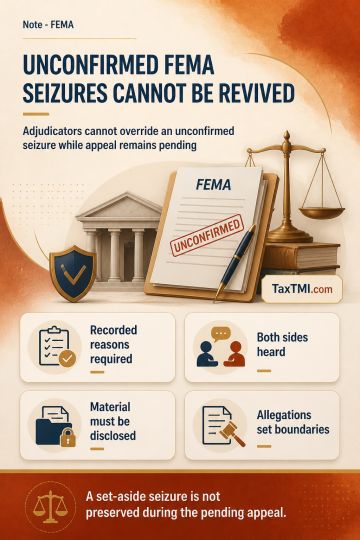
Non-confirmation of FEMA seizure prevents adjudicators from overriding pending appellate findings on recorded reasons and suspected foreign asset hold...
The HC held that the Official Liquidator's practice of depositing unpaid amounts into a common pool fund and utilizing these funds for payment of special/additional staff and office expenses contravenes Section 555 of the Companies Act, 1956. The court emphasized the statutory obligation to deposit such amounts into the respective company's liquidation account. The continuation of company-paid staff, deemed necessary solely for the Official Liquidator's office and not for liquidation proceedings, must be borne at the risk and cost of the Ministry of Corporate Affairs. The court directed that the amount in the common pool fund be transferred to the company liquidation account within 14 working days. Consequently, permission to appoint a Peon (MTS) in the liquidation of the company was not granted, and the application was disposed of with instructions for compliance.
The HC held that the Official Liquidator's practice of depositing unpaid amounts into a common pool fund and utilizing these funds for payment of special/additional staff and office expenses contravenes Section 555 of the Companies Act, 1956. The court emphasized the statutory obligation to deposit such amounts into the respective company's liquidation account. The continuation of company-paid staff, deemed necessary solely for the Official Liquidator's office and not for liquidation proceedings, must be borne at the risk and cost of the Ministry of Corporate Affairs. The court directed that the amount in the common pool fund be transferred to the company liquidation account within 14 working days. Consequently, permission to appoint a Peon (MTS) in the liquidation of the company was not granted, and the application was disposed of with instructions for compliance.
Note: It is a system-generated summary and is for quick reference only.
 TaxTMI
  TaxTMI