Transfer-pricing methodology protects commercially genuine associated-enterprise payments, while pre-2016 secondary adjustments and related notional i...
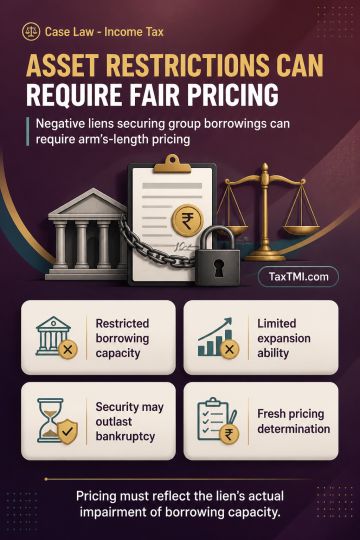
Negative liens over operating assets can constitute international transactions requiring arm's-length pricing reflecting restricted borrowing and expa...
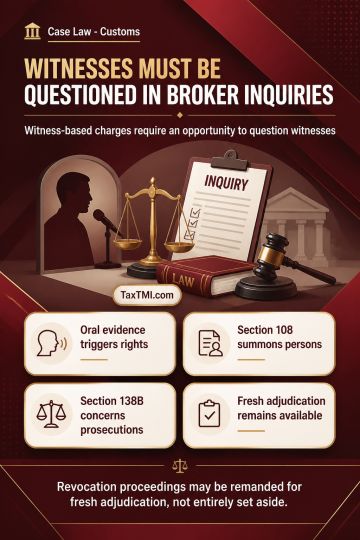
Cross-examination rights in Customs Broker revocation inquiries require witness examination; procedural denial may be cured through fresh adjudication...
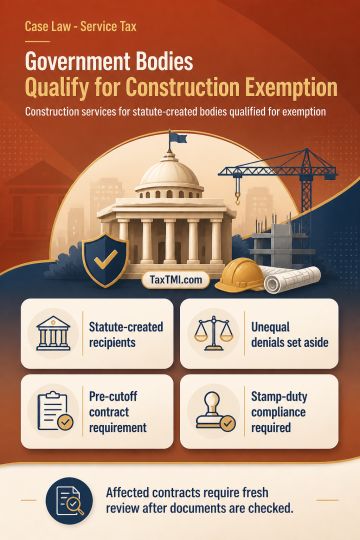
Governmental authority status supports construction-service exemption, while pre-cutoff contract and stamp-duty compliance requires verification on re...
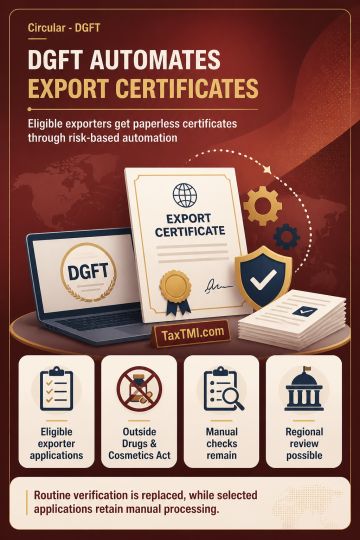
Automated Free Sale and Commerce Certificates enable paperless processing while retaining risk-based manual verification for selected exporter applica...
Page of 4830
Press 'Enter' after typing page number.
161 to 180 of 96587 Results
❮
❯
❯❯
0 / 200
Expand Note
Add to Folder
No Folders have been created
+
Are you sure you want to delete "My most important" ?
The ITAT allowed the appeal in part, directing the AO to recalculate the disallowance under section 14A read with Rule 8D by considering only investments yielding exempt income, in line with established precedents. The AO's non-acceptance of the assessee's suo-moto disallowance sufficed to demonstrate dissatisfaction, obviating the need for formal recording. Regarding the employee cost provision, the tribunal held that the assessee's creation of a provision for wage revision payments constituted an allowable business expenditure, rejecting its classification as a contingent liability. Finally, the AO was instructed to reconcile discrepancies between book profit figures in the assessment order and computation sheet, ensuring accurate determination. The appeal was allowed for statistical purposes with directions to provide the assessee a reasonable opportunity before passing the revised order.
The ITAT allowed the appeal in part, directing the AO to recalculate the disallowance under section 14A read with Rule 8D by considering only investments yielding exempt income, in line with established precedents. The AO's non-acceptance of the assessee's suo-moto disallowance sufficed to demonstrate dissatisfaction, obviating the need for formal recording. Regarding the employee cost provision, the tribunal held that the assessee's creation of a provision for wage revision payments constituted an allowable business expenditure, rejecting its classification as a contingent liability. Finally, the AO was instructed to reconcile discrepancies between book profit figures in the assessment order and computation sheet, ensuring accurate determination. The appeal was allowed for statistical purposes with directions to provide the assessee a reasonable opportunity before passing the revised order.
Note: It is a system-generated summary and is for quick reference only.
 TaxTMI
  TaxTMI
 of 4830















 Join Channel