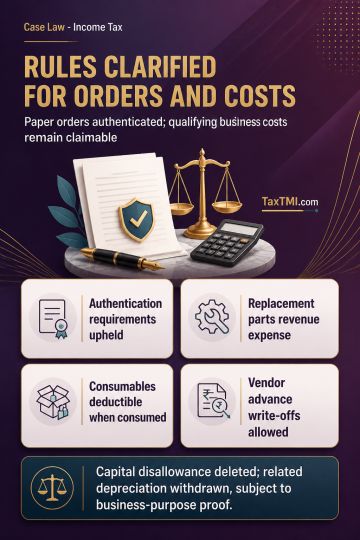
Authentication of paper assessment orders upheld, while qualifying repairs, consumables and vendor advance write-offs remain deductible business claim...
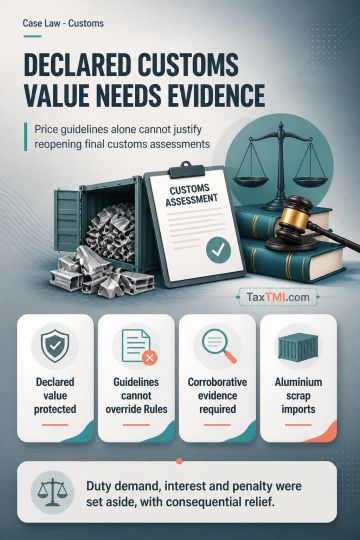
Transaction value cannot be rejected solely on non-statutory valuation guidelines without corroborative evidence supporting reassessment of final cust...
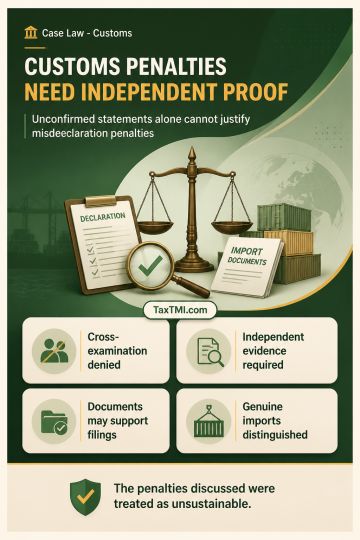
Cross-examination rights and corroborated evidence limit customs penalties for misdeclaration in genuine import transactions involving documented clea...
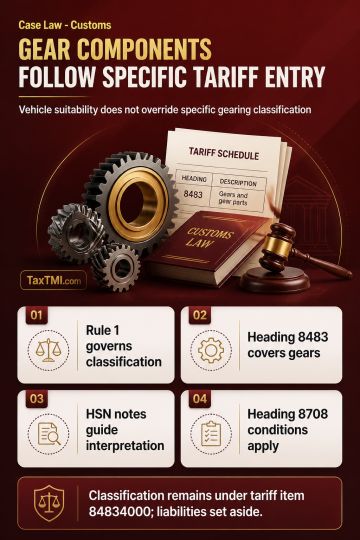
Tariff classification of vehicle gear components follows the specific gearing entry, displacing motor-vehicle parts classification and related liabili...
The HC allowed the revision application in a dishonour of cheque case under Section 138 of the Negotiable Instruments Act. The complainant, a company director, filed the complaint in his individual capacity without proper authorization or power of attorney from the company. The agreement was executed between two companies, requiring the complainant to represent the company rather than act personally. While lack of authorization constitutes a curable defect per Supreme Court precedent in M.M.T.C. Ltd. v. Medchl Chemicals, the company failed to rectify this defect at any subsequent stage. The Court held that authorized persons must file complaints on behalf of and in the name of the principal, not in their personal capacity, making the complaint legally impermissible.
The HC allowed the revision application in a dishonour of cheque case under Section 138 of the Negotiable Instruments Act. The complainant, a company director, filed the complaint in his individual capacity without proper authorization or power of attorney from the company. The agreement was executed between two companies, requiring the complainant to represent the company rather than act personally. While lack of authorization constitutes a curable defect per Supreme Court precedent in M.M.T.C. Ltd. v. Medchl Chemicals, the company failed to rectify this defect at any subsequent stage. The Court held that authorized persons must file complaints on behalf of and in the name of the principal, not in their personal capacity, making the complaint legally impermissible.
Note: It is a system-generated summary and is for quick reference only.
 TaxTMI
 of 4792






 Join Channel


 TaxTMI