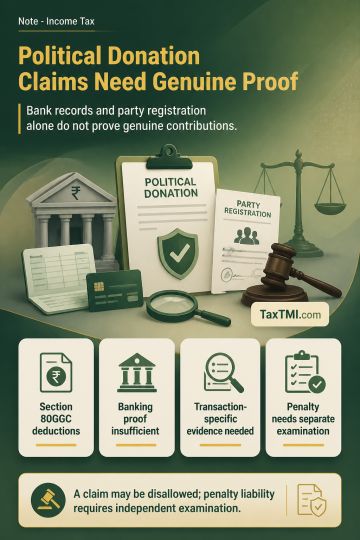
Political contribution deductions require genuine transactions; banking records and party registration alone cannot defeat evidence of accommodation e...
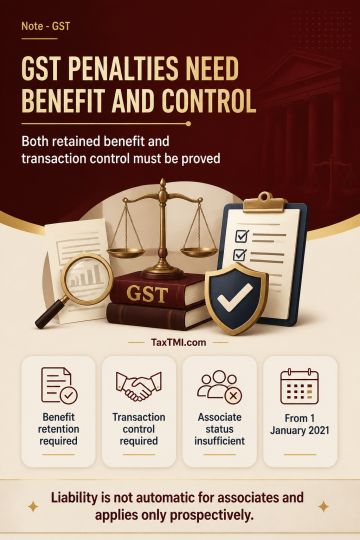
Post-death GST liability permits fresh proceedings against legal representatives, while discontinued-business recovery remains limited to the inherite...
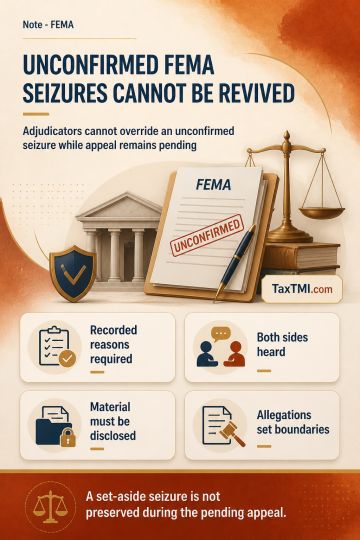
Non-confirmation of FEMA seizure prevents adjudicators from overriding pending appellate findings on recorded reasons and suspected foreign asset hold...
ITAT held that the assessee's appeal lacks merit. Despite multiple notices through e-filing portal, the assessee failed to respond or provide explanations for non-compliance. The tribunal affirmed the penalty u/s 271(1)(c) based on the assessee's non-disclosure of income discovered during survey proceedings. The ex-parte order was deemed valid, as the right to be heard is not absolute when sufficient opportunities are provided. Explanation 1 to section 271(1)(c) creates a presumption of concealment in absence of satisfactory explanation. The penalty was correctly levied and confirmed by lower authorities, and the assessee's appeal was consequently dismissed.
ITAT held that the assessee's appeal lacks merit. Despite multiple notices through e-filing portal, the assessee failed to respond or provide explanations for non-compliance. The tribunal affirmed the penalty u/s 271(1)(c) based on the assessee's non-disclosure of income discovered during survey proceedings. The ex-parte order was deemed valid, as the right to be heard is not absolute when sufficient opportunities are provided. Explanation 1 to section 271(1)(c) creates a presumption of concealment in absence of satisfactory explanation. The penalty was correctly levied and confirmed by lower authorities, and the assessee's appeal was consequently dismissed.
Note: It is a system-generated summary and is for quick reference only.
 TaxTMI
  TaxTMI