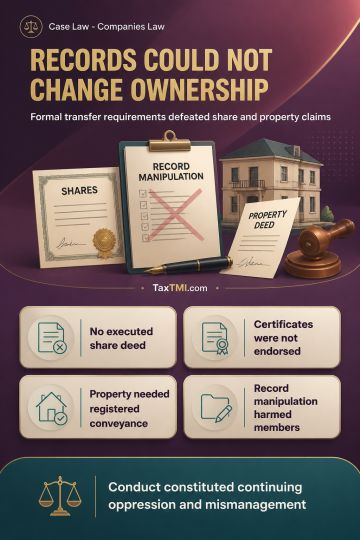
Statutory transfer formalities invalidated alleged share and property transfers, while retrospective record manipulation constituted oppression and mi...
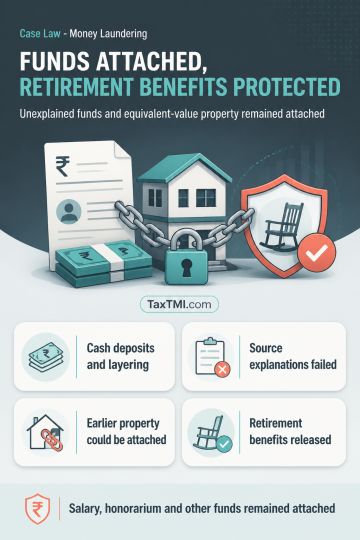
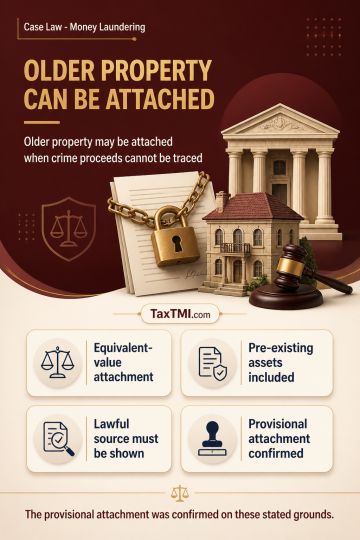
Provisional attachment of laundered funds and equivalent-value property sustained, with statutory protection limited to pension, gratuity and providen...
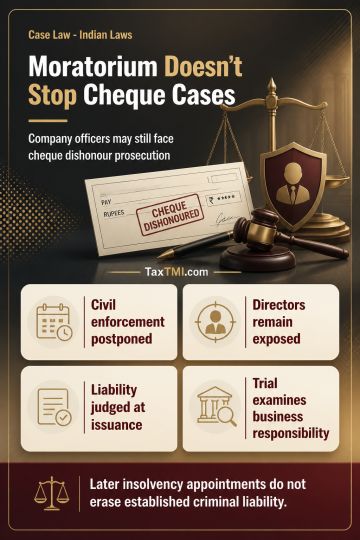
Insolvency moratorium does not shield company officers from cheque dishonour prosecution for liability arising before corporate insolvency proceedings...
SC held that under Order 18 Rule 17 CPC and Section 165 of Evidence Act, the power to recall a witness is exclusively within the court's discretion. The court may exercise its inherent jurisdiction under Section 151 CPC to permit a party to recall a witness if circumstances warrant, but such recall is not an automatic right. Cross-examination of a recalled witness requires explicit court permission. The court's primary objective is to discover or obtain proper proof of relevant facts. The Special Leave Petitions were consequently dismissed, affirming the court's broad discretionary power in witness examination.
SC held that under Order 18 Rule 17 CPC and Section 165 of Evidence Act, the power to recall a witness is exclusively within the court's discretion. The court may exercise its inherent jurisdiction under Section 151 CPC to permit a party to recall a witness if circumstances warrant, but such recall is not an automatic right. Cross-examination of a recalled witness requires explicit court permission. The court's primary objective is to discover or obtain proper proof of relevant facts. The Special Leave Petitions were consequently dismissed, affirming the court's broad discretionary power in witness examination.
Note: It is a system-generated summary and is for quick reference only.
 TaxTMI
 of 4792





 Join Channel


 TaxTMI