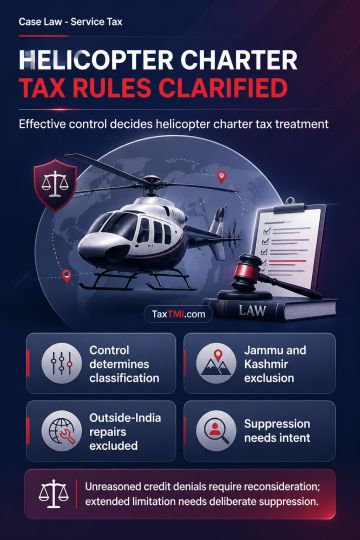
Helicopter charter classification requires effective control analysis, while territorial performance, reasoned credit orders and wilful suppression de...
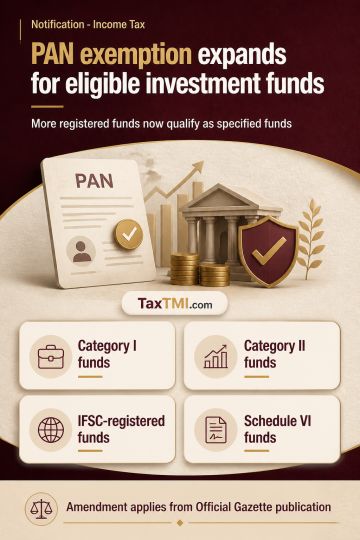
Specified fund definition expands PAN exemption eligibility for registered alternative investment funds and qualifying International Financial Service...
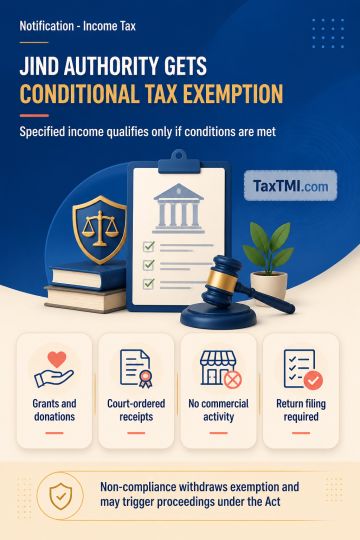
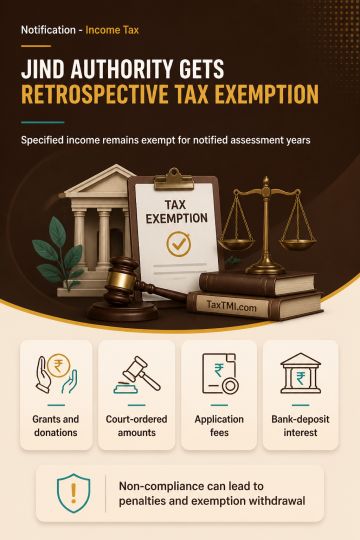
Tax exemption for specified legal-services authority income applies retrospectively, subject to non-commercial activity, unchanged income sources, and...
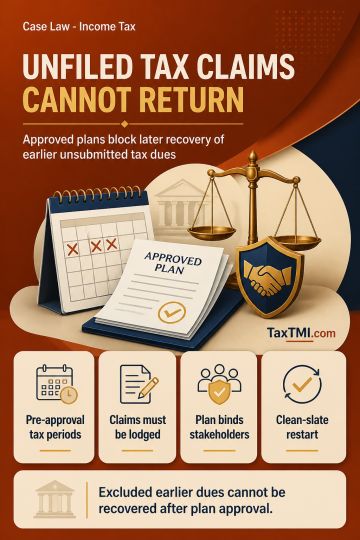
Approved resolution plans extinguish unsubmitted pre-approval tax claims, preventing later recovery outside the insolvency process and preserving a cl...
SC held that Respondent No. 1's appeal was time-barred under Section 61(2) of the IBC. The limitation period commenced on 07.04.2022 and expired on 07.05.2022, with a maximum statutory period of 45 days. The appeal was filed on 24.05.2022, beyond the prescribed and condonable periods. The NCLAT lacks jurisdiction to condone delays beyond the statutorily defined 30+15 days period. The court emphasized the IBC's strict procedural discipline, which mandates adherence to prescribed timelines to ensure efficient resolution of insolvency proceedings. Consequently, the appeal was dismissed, reinforcing the tribunal's limited power to extend limitation periods.
SC held that Respondent No. 1's appeal was time-barred under Section 61(2) of the IBC. The limitation period commenced on 07.04.2022 and expired on 07.05.2022, with a maximum statutory period of 45 days. The appeal was filed on 24.05.2022, beyond the prescribed and condonable periods. The NCLAT lacks jurisdiction to condone delays beyond the statutorily defined 30+15 days period. The court emphasized the IBC's strict procedural discipline, which mandates adherence to prescribed timelines to ensure efficient resolution of insolvency proceedings. Consequently, the appeal was dismissed, reinforcing the tribunal's limited power to extend limitation periods.
Note: It is a system-generated summary and is for quick reference only.
 TaxTMI
 of 4801




 Join Channel


 TaxTMI
