Inherited property sale proceeds require capital-gains treatment where ownership is supported by evidence, not suspicion or unverified signature doubt...
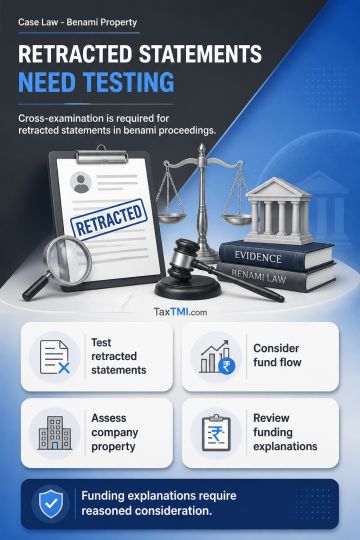
Cross-examination of retracted statements is essential where foundational evidence supports a benami allegation and documented funding explanations re...
Capital-goods exemption covers plant-modernisation accessories, while the import restriction applies only to earlier capital-goods components and spar...
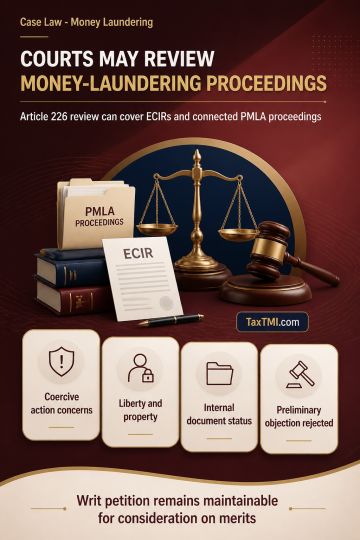
Constitutional judicial review permits challenges to ECIRs and connected money-laundering proceedings where coercive action affects fundamental intere...
CESTAT held that Section 11B(2)(c) and (d) do not provide for refund of unutilized cenvat credit upon factory closure. Rule 5 of Cenvat Credit Rules, 2004 permits refund only for export-related scenarios, not for manufacturing cessation. The appellant's contentions were rejected, finding no statutory basis for cash refund of accumulated credit. The tribunal emphasized that equitable considerations cannot override explicit statutory provisions. Despite potential financial hardship, the claim was deemed untenable as the regulations do not permit such refunds. Consequently, the appeal was dismissed, reinforcing a strict interpretation of tax credit refund regulations.
CESTAT held that Section 11B(2)(c) and (d) do not provide for refund of unutilized cenvat credit upon factory closure. Rule 5 of Cenvat Credit Rules, 2004 permits refund only for export-related scenarios, not for manufacturing cessation. The appellant's contentions were rejected, finding no statutory basis for cash refund of accumulated credit. The tribunal emphasized that equitable considerations cannot override explicit statutory provisions. Despite potential financial hardship, the claim was deemed untenable as the regulations do not permit such refunds. Consequently, the appeal was dismissed, reinforcing a strict interpretation of tax credit refund regulations.
Note: It is a system-generated summary and is for quick reference only.
 TaxTMI
 of 4784









 Join Channel


 TaxTMI