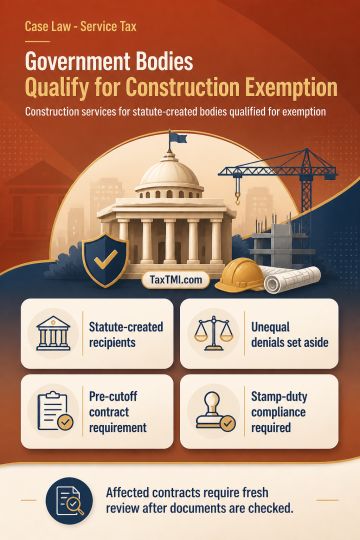
Governmental authority status supports construction-service exemption, while pre-cutoff contract and stamp-duty compliance requires verification on re...
Automated Free Sale and Commerce Certificates enable paperless processing while retaining risk-based manual verification for selected exporter applica...
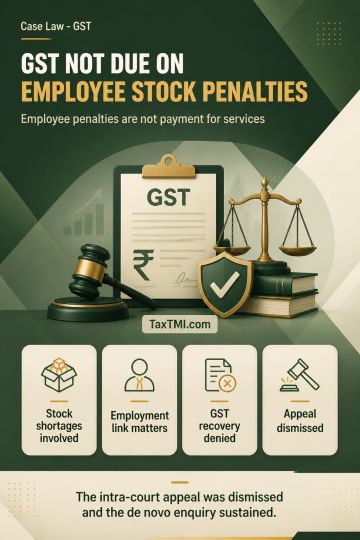
Employee stock-shortage penalties do not constitute consideration for services, preventing GST collection under Schedule II in employment relationship...
HC transferred a winding up petition to NCLT under Section 434(1)(c) of the Companies Act. The court emphasized the legislative intent to revive corporate debtors and prevent liquidation. The primary focus was on exploring revival opportunities before concluding corporate death is inevitable. The Supreme Court's precedent in Action Ispat guided the decision, highlighting that IBC is a beneficial legislation aimed at protecting corporate entities from irretrievable financial collapse. The court stressed making comprehensive efforts to resuscitate the corporate debtor in the broader economic and stakeholder interests, prioritizing rehabilitation over liquidation. The transfer was deemed appropriate, with the appeal ultimately being dismissed.
HC transferred a winding up petition to NCLT under Section 434(1)(c) of the Companies Act. The court emphasized the legislative intent to revive corporate debtors and prevent liquidation. The primary focus was on exploring revival opportunities before concluding corporate death is inevitable. The Supreme Court's precedent in Action Ispat guided the decision, highlighting that IBC is a beneficial legislation aimed at protecting corporate entities from irretrievable financial collapse. The court stressed making comprehensive efforts to resuscitate the corporate debtor in the broader economic and stakeholder interests, prioritizing rehabilitation over liquidation. The transfer was deemed appropriate, with the appeal ultimately being dismissed.
Note: It is a system-generated summary and is for quick reference only.
 TaxTMI
  TaxTMI
 of 4828













 Join Channel


