Governmental authority status supports construction-service exemption, while pre-cutoff contract and stamp-duty compliance requires verification on re...
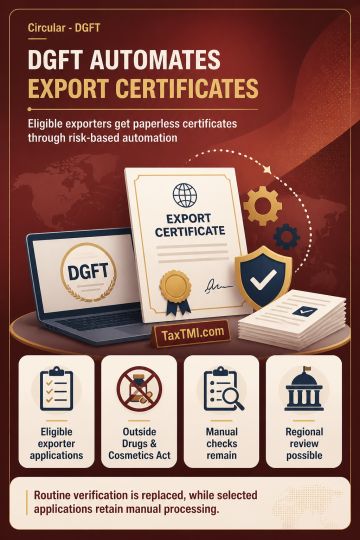
Automated Free Sale and Commerce Certificates enable paperless processing while retaining risk-based manual verification for selected exporter applica...
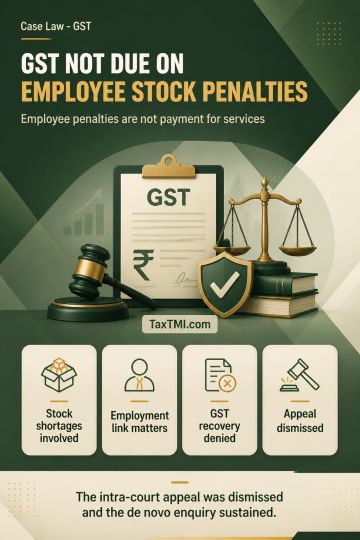
Employee stock-shortage penalties do not constitute consideration for services, preventing GST collection under Schedule II in employment relationship...
The SC affirmed the arbitral tribunal's inherent power to implead or join non-signatories to arbitration proceedings based on the 'group of companies' doctrine. The tribunal is deemed the most appropriate forum to determine whether a non-signatory is bound by an arbitration agreement, given its ability to comprehensively assess evidence and circumstances. The court emphasized that the jurisdiction of an arbitral tribunal stems from the arbitration agreement itself, and there are no statutory prohibitions preventing the tribunal from impleading a non-signatory. The appeal was ultimately dismissed, with the court highlighting the need for legislative clarity in arbitration law to reduce uncertainty in commercial disputes.
The SC affirmed the arbitral tribunal's inherent power to implead or join non-signatories to arbitration proceedings based on the 'group of companies' doctrine. The tribunal is deemed the most appropriate forum to determine whether a non-signatory is bound by an arbitration agreement, given its ability to comprehensively assess evidence and circumstances. The court emphasized that the jurisdiction of an arbitral tribunal stems from the arbitration agreement itself, and there are no statutory prohibitions preventing the tribunal from impleading a non-signatory. The appeal was ultimately dismissed, with the court highlighting the need for legislative clarity in arbitration law to reduce uncertainty in commercial disputes.
Note: It is a system-generated summary and is for quick reference only.
 TaxTMI
  TaxTMI
 of 4828









 Join Channel


