Specialized Investment Fund distribution now requires dedicated certification, while transitional recognition preserves existing qualified distributor...
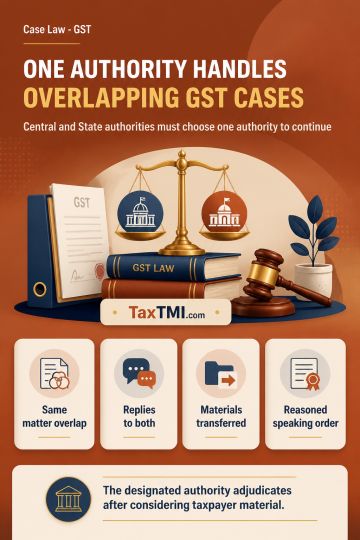
Overlapping GST proceedings require Central and State authorities to designate one competent authority for coordinated adjudication of the same matter...
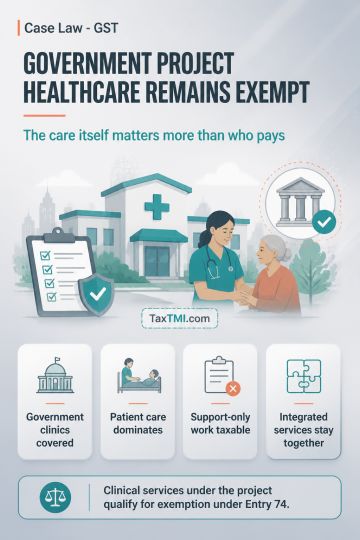
Composite healthcare supplies retain exemption when patient care is the contract's essential character, despite payment through an implementing agency...
The GOI officially refutes claims of proposed GST on UPI transactions over Rs.2,000, confirming no such taxation measure exists. CBIC has eliminated Merchant Discount Rate (MDR) on Person-to-Merchant UPI transactions, rendering GST inapplicable. An active Incentive Scheme from FY 2021-22 supports low-value UPI transactions, with escalating allocations (FY2021-22: Rs.1,389 crore; FY2022-23: Rs.2,210 crore; FY2023-24: Rs.3,631 crore). The policy aims to promote digital payments, evidenced by India's leadership in real-time transactions, accounting for 49% globally in 2023 and witnessing UPI transaction values surge from Rs.21.3 lakh crore in FY 2019-20 to Rs.260.56 lakh crore by March 2025.
The GOI officially refutes claims of proposed GST on UPI transactions over Rs.2,000, confirming no such taxation measure exists. CBIC has eliminated Merchant Discount Rate (MDR) on Person-to-Merchant UPI transactions, rendering GST inapplicable. An active Incentive Scheme from FY 2021-22 supports low-value UPI transactions, with escalating allocations (FY2021-22: Rs.1,389 crore; FY2022-23: Rs.2,210 crore; FY2023-24: Rs.3,631 crore). The policy aims to promote digital payments, evidenced by India's leadership in real-time transactions, accounting for 49% globally in 2023 and witnessing UPI transaction values surge from Rs.21.3 lakh crore in FY 2019-20 to Rs.260.56 lakh crore by March 2025.
Note: It is a system-generated summary and is for quick reference only.
 TaxTMI
 of 4805










 Join Channel


 TaxTMI