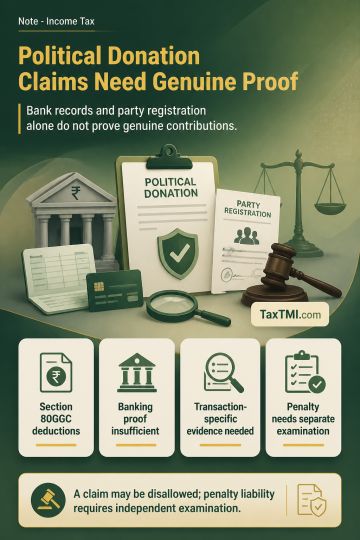
Political contribution deductions require genuine transactions; banking records and party registration alone cannot defeat evidence of accommodation e...
Post-death GST liability permits fresh proceedings against legal representatives, while discontinued-business recovery remains limited to the inherite...
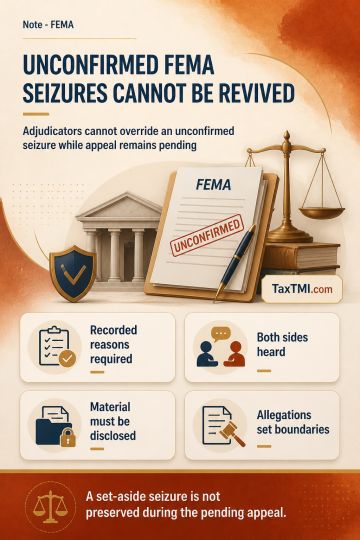
Non-confirmation of FEMA seizure prevents adjudicators from overriding pending appellate findings on recorded reasons and suspected foreign asset hold...
The GOI officially refutes claims of proposed GST on UPI transactions over Rs.2,000, confirming no such taxation measure exists. CBIC has eliminated Merchant Discount Rate (MDR) on Person-to-Merchant UPI transactions, rendering GST inapplicable. An active Incentive Scheme from FY 2021-22 supports low-value UPI transactions, with escalating allocations (FY2021-22: Rs.1,389 crore; FY2022-23: Rs.2,210 crore; FY2023-24: Rs.3,631 crore). The policy aims to promote digital payments, evidenced by India's leadership in real-time transactions, accounting for 49% globally in 2023 and witnessing UPI transaction values surge from Rs.21.3 lakh crore in FY 2019-20 to Rs.260.56 lakh crore by March 2025.
The GOI officially refutes claims of proposed GST on UPI transactions over Rs.2,000, confirming no such taxation measure exists. CBIC has eliminated Merchant Discount Rate (MDR) on Person-to-Merchant UPI transactions, rendering GST inapplicable. An active Incentive Scheme from FY 2021-22 supports low-value UPI transactions, with escalating allocations (FY2021-22: Rs.1,389 crore; FY2022-23: Rs.2,210 crore; FY2023-24: Rs.3,631 crore). The policy aims to promote digital payments, evidenced by India's leadership in real-time transactions, accounting for 49% globally in 2023 and witnessing UPI transaction values surge from Rs.21.3 lakh crore in FY 2019-20 to Rs.260.56 lakh crore by March 2025.
Note: It is a system-generated summary and is for quick reference only.
 TaxTMI
  TaxTMI