Jurisdictional facts in certificate-of-origin discrepancies can support customs show-cause proceedings, leaving factual explanations for departmental ...
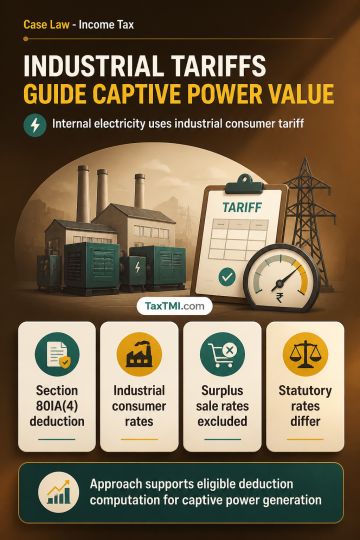
Market value for captive electricity consumption follows industrial consumer tariffs, supporting profit computation for the power generation deduction...
The AAR held that the GST rate for the project is governed by the one-time option exercised by the original promoter at 12% with input tax credit. The applicant is bound by this project-specific election and cannot switch to a 5% rate without input tax credit. The ruling emphasizes that the tax treatment is project-based, not promoter-specific. Consequently, the applicant must discharge GST at 18% (9% CGST + 9% SGST) with input tax credit, applying a one-third deduction for land value. The option applies uniformly to existing and new buyers, preventing differential tax rates within the same project.
The AAR held that the GST rate for the project is governed by the one-time option exercised by the original promoter at 12% with input tax credit. The applicant is bound by this project-specific election and cannot switch to a 5% rate without input tax credit. The ruling emphasizes that the tax treatment is project-based, not promoter-specific. Consequently, the applicant must discharge GST at 18% (9% CGST + 9% SGST) with input tax credit, applying a one-third deduction for land value. The option applies uniformly to existing and new buyers, preventing differential tax rates within the same project.
Note: It is a system-generated summary and is for quick reference only.
 TaxTMI
 of 4801

















 Join Channel


 TaxTMI
