Receipt of immovable property requires actual possession or enjoyment; redevelopment allotments exchanged for tenancy rights fall outside deemed incom...
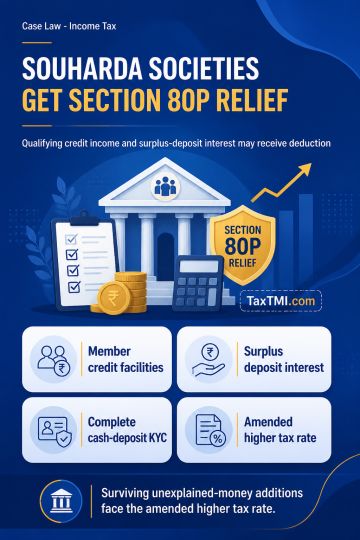
Section 80P deduction covers Souharda credit societies, including qualifying surplus-deposit interest, subject to member KYC verification for cash dep...
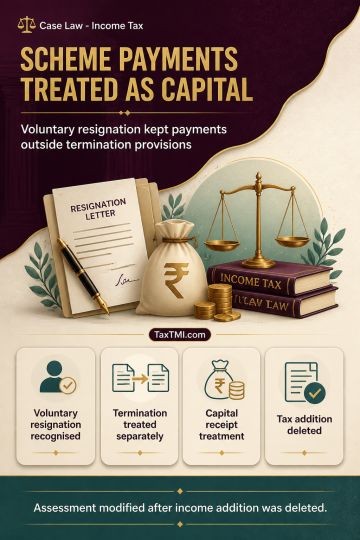
Transfer-pricing benchmarking and capital-receipt principles sustained taxpayer relief, while unsupported property-advance write-offs remained disallo...
The AAR held that the GST rate for the project is governed by the one-time option exercised by the original promoter at 12% with input tax credit. The applicant is bound by this project-specific election and cannot switch to a 5% rate without input tax credit. The ruling emphasizes that the tax treatment is project-based, not promoter-specific. Consequently, the applicant must discharge GST at 18% (9% CGST + 9% SGST) with input tax credit, applying a one-third deduction for land value. The option applies uniformly to existing and new buyers, preventing differential tax rates within the same project.
The AAR held that the GST rate for the project is governed by the one-time option exercised by the original promoter at 12% with input tax credit. The applicant is bound by this project-specific election and cannot switch to a 5% rate without input tax credit. The ruling emphasizes that the tax treatment is project-based, not promoter-specific. Consequently, the applicant must discharge GST at 18% (9% CGST + 9% SGST) with input tax credit, applying a one-third deduction for land value. The option applies uniformly to existing and new buyers, preventing differential tax rates within the same project.
Note: It is a system-generated summary and is for quick reference only.
 TaxTMI
 of 4800



















 Join Channel


 TaxTMI
