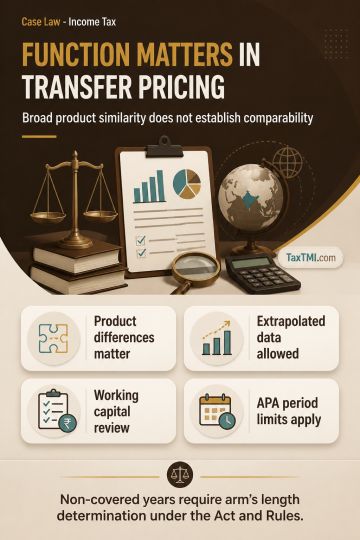
Transfer pricing comparability requires functional alignment and permits working capital adjustment, while APA margins cannot govern non-covered years...
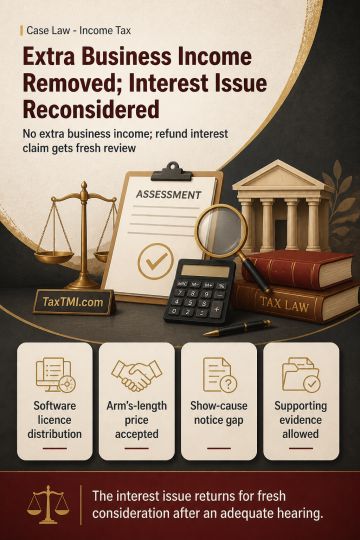
Treaty benefit, goodwill depreciation and hedging costs: export commission disallowed, while key business deductions and depreciation claims succeeded...
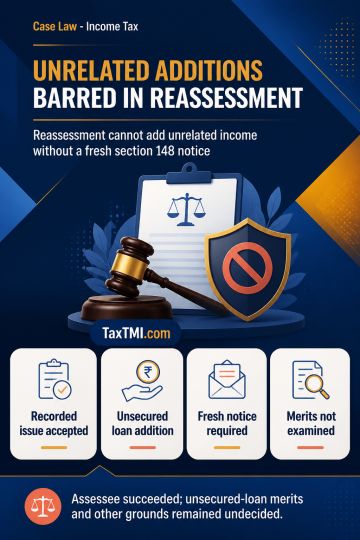
Undisclosed foreign asset classification requires an unexplained source; unrebutted affidavits and corroborative evidence defeated the Black Money Act...
The AAR held that the GST rate for the project is governed by the one-time option exercised by the original promoter at 12% with input tax credit. The applicant is bound by this project-specific election and cannot switch to a 5% rate without input tax credit. The ruling emphasizes that the tax treatment is project-based, not promoter-specific. Consequently, the applicant must discharge GST at 18% (9% CGST + 9% SGST) with input tax credit, applying a one-third deduction for land value. The option applies uniformly to existing and new buyers, preventing differential tax rates within the same project.
The AAR held that the GST rate for the project is governed by the one-time option exercised by the original promoter at 12% with input tax credit. The applicant is bound by this project-specific election and cannot switch to a 5% rate without input tax credit. The ruling emphasizes that the tax treatment is project-based, not promoter-specific. Consequently, the applicant must discharge GST at 18% (9% CGST + 9% SGST) with input tax credit, applying a one-third deduction for land value. The option applies uniformly to existing and new buyers, preventing differential tax rates within the same project.
Note: It is a system-generated summary and is for quick reference only.
 TaxTMI
 of 4800


















 Join Channel


 TaxTMI
