Transfer pricing and tax deductions upheld on established principles, while employee contributions and warranty provisions returned for fresh examinat...
Captive transfer pricing relies on industrial consumer tariffs, while genuine quotations can benchmark effluent treatment transfers under the Other Me...
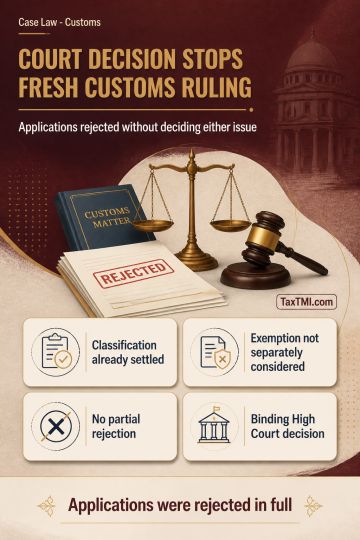
Specific tariff classification for ophthalmic instruments and extended limitation principles determine the treatment of duty demands, confiscation, an...
Integrated golf function determines classification, placing launch monitors and simulators under other golf equipment rather than measuring instrument...
Public servant status under anti-corruption law extends to recognised stock exchange leadership; constitutional and sanction challenges do not succeed...
Acquiescence, homebuyer protection and clean-slate resolution principles prevent landowners from disrupting an integrated project through late termina...
ITAT adjudicated a taxation dispute concerning penalty levy under section 270A. The tribunal examined whether disallowed expenses constituted underreported income. Key findings indicate that adjustments made under section 143(1)(a) involving apparent computational mistakes do not qualify as underreported income warranting penalty. The tribunal distinguished between inadvertent computational errors and deliberate income misreporting. Specifically, additions made during assessment that stem from apparent mistakes are exempt from penalty provisions. The tribunal interpreted section 270A(2)(a) narrowly, holding that only income determined through scrutiny assessment can be classified as underreported. Consequently, the tribunal ruled in favor of the assessee, negating penalty imposition and emphasizing legislative intent to exclude inadvertent computational errors from punitive taxation measures.
ITAT adjudicated a taxation dispute concerning penalty levy under section 270A. The tribunal examined whether disallowed expenses constituted underreported income. Key findings indicate that adjustments made under section 143(1)(a) involving apparent computational mistakes do not qualify as underreported income warranting penalty. The tribunal distinguished between inadvertent computational errors and deliberate income misreporting. Specifically, additions made during assessment that stem from apparent mistakes are exempt from penalty provisions. The tribunal interpreted section 270A(2)(a) narrowly, holding that only income determined through scrutiny assessment can be classified as underreported. Consequently, the tribunal ruled in favor of the assessee, negating penalty imposition and emphasizing legislative intent to exclude inadvertent computational errors from punitive taxation measures.
Note: It is a system-generated summary and is for quick reference only.
 TaxTMI
 of 4805




















 Join Channel


 TaxTMI