Inherited property sale proceeds require capital-gains treatment where ownership is supported by evidence, not suspicion or unverified signature doubt...
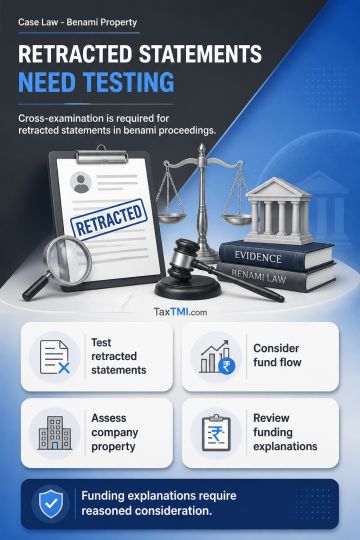
Cross-examination of retracted statements is essential where foundational evidence supports a benami allegation and documented funding explanations re...
Capital-goods exemption covers plant-modernisation accessories, while the import restriction applies only to earlier capital-goods components and spar...
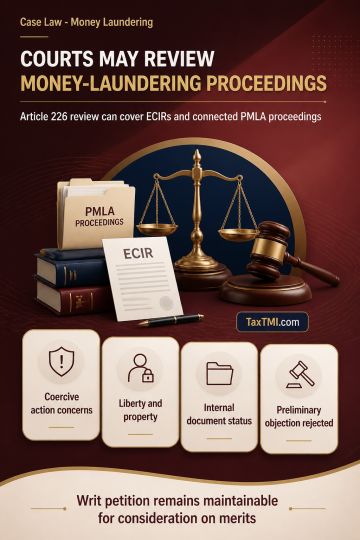
Constitutional judicial review permits challenges to ECIRs and connected money-laundering proceedings where coercive action affects fundamental intere...
ITAT adjudicated a taxation dispute concerning penalty levy under section 270A. The tribunal examined whether disallowed expenses constituted underreported income. Key findings indicate that adjustments made under section 143(1)(a) involving apparent computational mistakes do not qualify as underreported income warranting penalty. The tribunal distinguished between inadvertent computational errors and deliberate income misreporting. Specifically, additions made during assessment that stem from apparent mistakes are exempt from penalty provisions. The tribunal interpreted section 270A(2)(a) narrowly, holding that only income determined through scrutiny assessment can be classified as underreported. Consequently, the tribunal ruled in favor of the assessee, negating penalty imposition and emphasizing legislative intent to exclude inadvertent computational errors from punitive taxation measures.
ITAT adjudicated a taxation dispute concerning penalty levy under section 270A. The tribunal examined whether disallowed expenses constituted underreported income. Key findings indicate that adjustments made under section 143(1)(a) involving apparent computational mistakes do not qualify as underreported income warranting penalty. The tribunal distinguished between inadvertent computational errors and deliberate income misreporting. Specifically, additions made during assessment that stem from apparent mistakes are exempt from penalty provisions. The tribunal interpreted section 270A(2)(a) narrowly, holding that only income determined through scrutiny assessment can be classified as underreported. Consequently, the tribunal ruled in favor of the assessee, negating penalty imposition and emphasizing legislative intent to exclude inadvertent computational errors from punitive taxation measures.
Note: It is a system-generated summary and is for quick reference only.
 TaxTMI
 of 4794

















 Join Channel


 TaxTMI