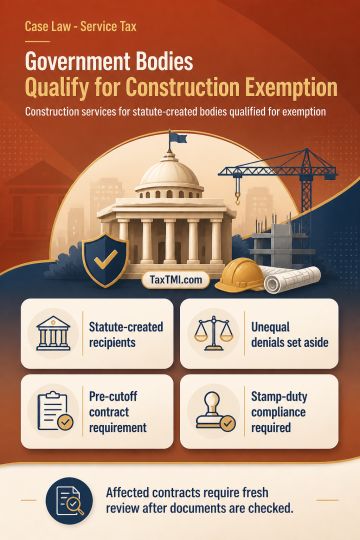
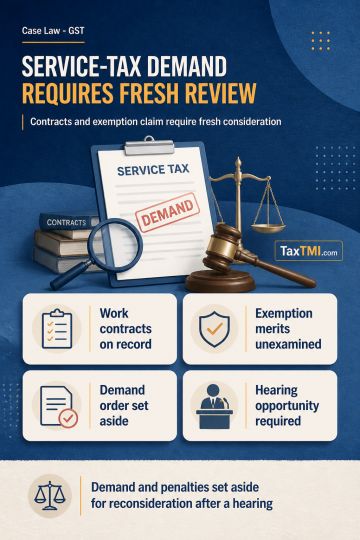
Governmental authority status supports construction-service exemption, while pre-cutoff contract and stamp-duty compliance requires verification on re...
Automated Free Sale and Commerce Certificates enable paperless processing while retaining risk-based manual verification for selected exporter applica...
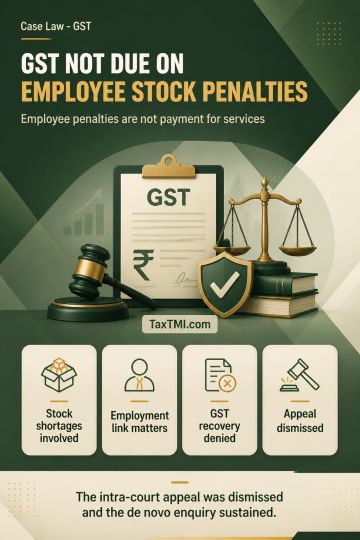
Employee stock-shortage penalties do not constitute consideration for services, preventing GST collection under Schedule II in employment relationship...
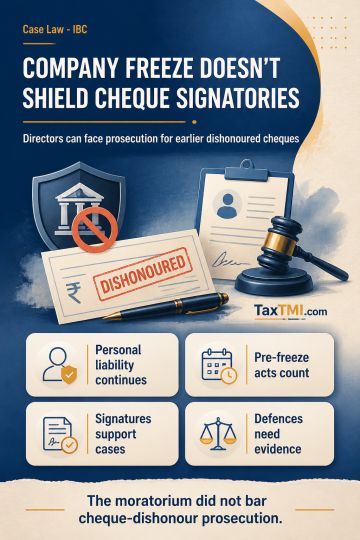
The HC dismissed a petition challenging a summoning order in a dishonored cheque case. The Court found the complaint was filed within the limitation period, as the 30-day limitation under Section 142(b) of the NI Act began on December 3, 2019 (following the 15-day notice period), making the January 2, 2020 deadline. While there appeared to be a 3-day delay, the Court noted that such minor delay was condonable under Section 142(b). The Court determined a prima facie case existed against the petitioners based on the respondent's affidavit evidence, which was sufficient under Section 145 of the NI Act for issuing summons. The petitioners' arguments regarding corporate liability were deemed premature and could be raised during trial.
The HC dismissed a petition challenging a summoning order in a dishonored cheque case. The Court found the complaint was filed within the limitation period, as the 30-day limitation under Section 142(b) of the NI Act began on December 3, 2019 (following the 15-day notice period), making the January 2, 2020 deadline. While there appeared to be a 3-day delay, the Court noted that such minor delay was condonable under Section 142(b). The Court determined a prima facie case existed against the petitioners based on the respondent's affidavit evidence, which was sufficient under Section 145 of the NI Act for issuing summons. The petitioners' arguments regarding corporate liability were deemed premature and could be raised during trial.
Note: It is a system-generated summary and is for quick reference only.
 TaxTMI
  TaxTMI
 of 4828








 Join Channel


