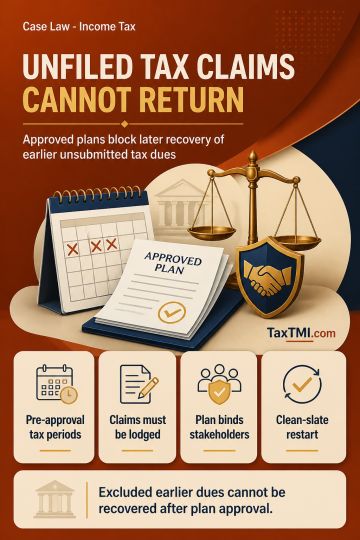
Approved resolution plans extinguish unsubmitted pre-approval tax claims, preventing later recovery outside the insolvency process and preserving a cl...
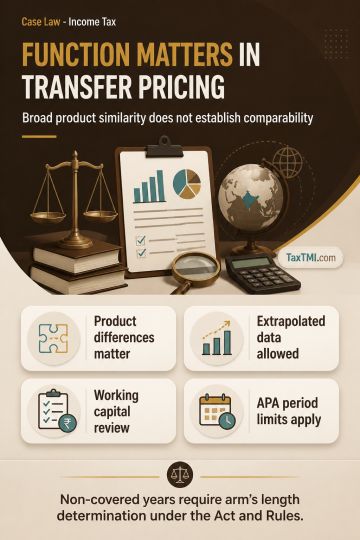
Transfer pricing comparability requires functional alignment and permits working capital adjustment, while APA margins cannot govern non-covered years...
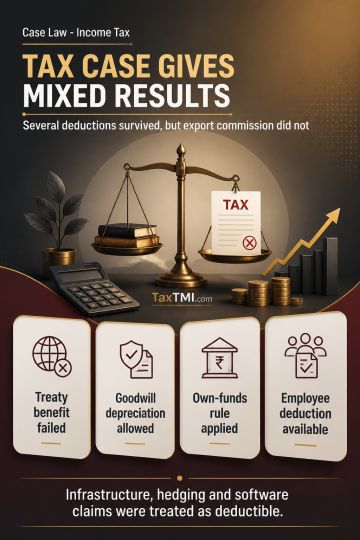
Treaty benefit, goodwill depreciation and hedging costs: export commission disallowed, while key business deductions and depreciation claims succeeded...
The HC held that the Show Cause Notice (SCN) was invalidly issued as it merely alleged wrongful refund claims without substantiating fraud or misrepresentation. Following precedents in Parity Infotech and HCL Infotech Ltd., the Court determined that invoking the extended limitation period under Section 74 requires specific allegations of fraud, misstatement, or suppression of facts, not merely mechanical reproduction of statutory language. The Court found the SCN was issued as a circuitous means to avoid consequences from previous litigation between the parties, and that refund claims cannot be legitimately stalled through such tactics. The petition was accordingly disposed of in the petitioner's favor.
The HC held that the Show Cause Notice (SCN) was invalidly issued as it merely alleged wrongful refund claims without substantiating fraud or misrepresentation. Following precedents in Parity Infotech and HCL Infotech Ltd., the Court determined that invoking the extended limitation period under Section 74 requires specific allegations of fraud, misstatement, or suppression of facts, not merely mechanical reproduction of statutory language. The Court found the SCN was issued as a circuitous means to avoid consequences from previous litigation between the parties, and that refund claims cannot be legitimately stalled through such tactics. The petition was accordingly disposed of in the petitioner's favor.
Note: It is a system-generated summary and is for quick reference only.
 TaxTMI
 of 4805



 Join Channel


 TaxTMI
