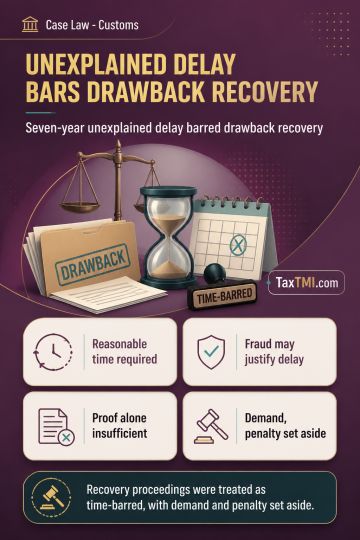
Bona fide disclosure requirements govern under-reporting penalties, and post-penalty immunity applications cannot secure available statutory protectio...
Certificate-of-origin verification procedure governs preferential customs benefits; denial without retroactive verification was set aside with consequ...
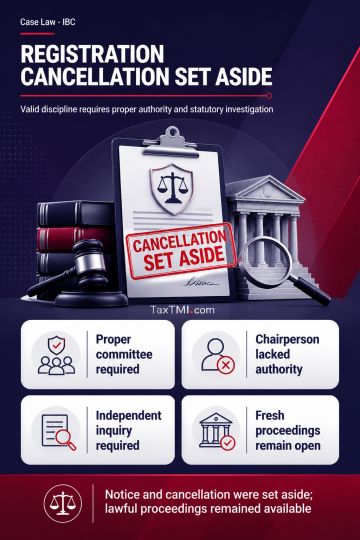
Disciplinary Committee jurisdiction and mandatory investigation requirements invalidated cancellation of an insolvency professional's registration and...
Retention of seized property survives where recorded reasons support proceeds of crime, while stayed investigation periods are excluded from limitatio...
The HC held that the 60-day limitation period under Section 62(2) of the GST Act is directory rather than mandatory. Where a registered person fails to file returns within the prescribed timeframe, resulting in best judgment assessment orders, the right to file returns cannot be denied merely because the 60-day period has elapsed. If the taxpayer demonstrates valid reasons beyond their control for the delay, such delay can be condoned upon application. The petitioner was directed to file a delay condonation application within 15 days, which the second respondent must consider on merits before permitting revised returns. The petition was accordingly disposed of.
The HC held that the 60-day limitation period under Section 62(2) of the GST Act is directory rather than mandatory. Where a registered person fails to file returns within the prescribed timeframe, resulting in best judgment assessment orders, the right to file returns cannot be denied merely because the 60-day period has elapsed. If the taxpayer demonstrates valid reasons beyond their control for the delay, such delay can be condoned upon application. The petitioner was directed to file a delay condonation application within 15 days, which the second respondent must consider on merits before permitting revised returns. The petition was accordingly disposed of.
Note: It is a system-generated summary and is for quick reference only.
 TaxTMI
  TaxTMI
 of 4809

















 Join Channel


