Clean slate principle extinguishes uncrystallised operational claims and bars continuation of pending recovery and arbitral proceedings after plan app...
Works contract classification governs composite layout-development contracts where VAT-paid goods are transferred alongside construction and infrastru...
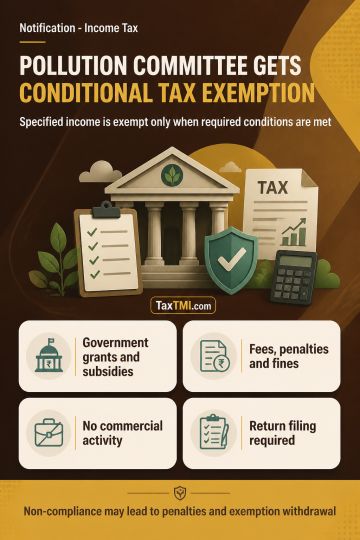
Specified income tax exemption for pollution control body remains conditional on non-commercial activity, unchanged income character, and return filin...
Jurisdictional facts in certificate-of-origin discrepancies can support customs show-cause proceedings, leaving factual explanations for departmental ...
The HC held that the 60-day limitation period under Section 62(2) of the GST Act is directory rather than mandatory. Where a registered person fails to file returns within the prescribed timeframe, resulting in best judgment assessment orders, the right to file returns cannot be denied merely because the 60-day period has elapsed. If the taxpayer demonstrates valid reasons beyond their control for the delay, such delay can be condoned upon application. The petitioner was directed to file a delay condonation application within 15 days, which the second respondent must consider on merits before permitting revised returns. The petition was accordingly disposed of.
The HC held that the 60-day limitation period under Section 62(2) of the GST Act is directory rather than mandatory. Where a registered person fails to file returns within the prescribed timeframe, resulting in best judgment assessment orders, the right to file returns cannot be denied merely because the 60-day period has elapsed. If the taxpayer demonstrates valid reasons beyond their control for the delay, such delay can be condoned upon application. The petitioner was directed to file a delay condonation application within 15 days, which the second respondent must consider on merits before permitting revised returns. The petition was accordingly disposed of.
Note: It is a system-generated summary and is for quick reference only.
 TaxTMI
  TaxTMI
 of 4809














 Join Channel