Specialized Investment Fund distribution now requires dedicated certification, while transitional recognition preserves existing qualified distributor...
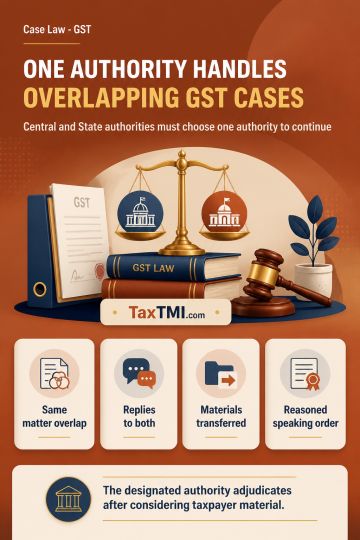
Overlapping GST proceedings require Central and State authorities to designate one competent authority for coordinated adjudication of the same matter...
Composite healthcare supplies retain exemption when patient care is the contract's essential character, despite payment through an implementing agency...
The HC held that the 60-day limitation period under Section 62(2) of the GST Act is directory rather than mandatory. Where a registered person fails to file returns within the prescribed timeframe, resulting in best judgment assessment orders, the right to file returns cannot be denied merely because the 60-day period has elapsed. If the taxpayer demonstrates valid reasons beyond their control for the delay, such delay can be condoned upon application. The petitioner was directed to file a delay condonation application within 15 days, which the second respondent must consider on merits before permitting revised returns. The petition was accordingly disposed of.
The HC held that the 60-day limitation period under Section 62(2) of the GST Act is directory rather than mandatory. Where a registered person fails to file returns within the prescribed timeframe, resulting in best judgment assessment orders, the right to file returns cannot be denied merely because the 60-day period has elapsed. If the taxpayer demonstrates valid reasons beyond their control for the delay, such delay can be condoned upon application. The petitioner was directed to file a delay condonation application within 15 days, which the second respondent must consider on merits before permitting revised returns. The petition was accordingly disposed of.
Note: It is a system-generated summary and is for quick reference only.
 TaxTMI
  TaxTMI
 of 4807


















 Join Channel