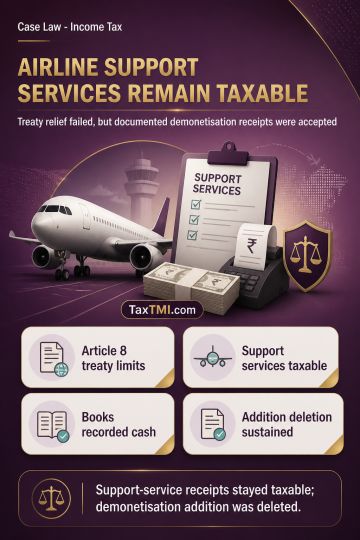
Article 8 treaty coverage excluded third-party airline support services, while documented demonetisation cash receipts remained accepted business inco...
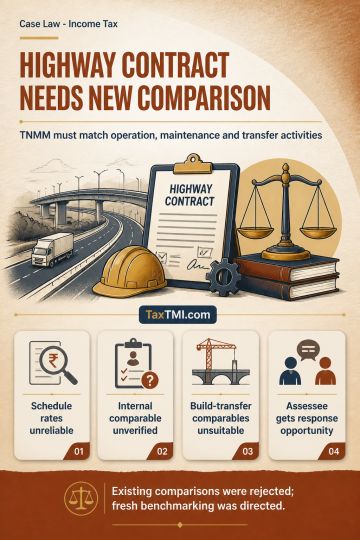
Functional comparability under TNMM requires highway contract benchmarks to reflect operation, maintenance and transfer activities, requiring fresh be...
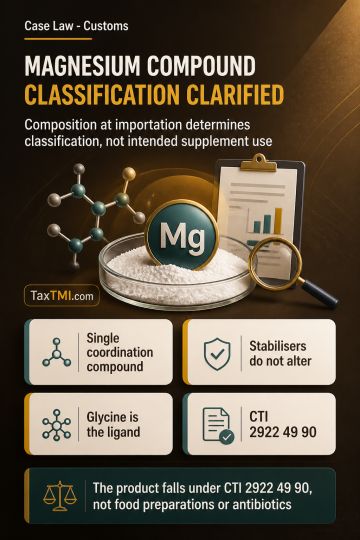
Objective characteristics govern magnesium bis-glycinate chelate classification as an amino-acid coordination compound, not a food preparation or anti...
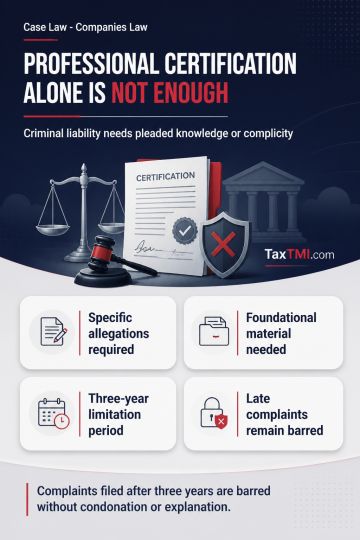
Independent professional certification requires pleaded knowledge or complicity for criminal liability; untimely complaints remain barred by limitatio...
The HC held that the 60-day limitation period under Section 62(2) of the GST Act is directory rather than mandatory. Where a registered person fails to file returns within the prescribed timeframe, resulting in best judgment assessment orders, the right to file returns cannot be denied merely because the 60-day period has elapsed. If the taxpayer demonstrates valid reasons beyond their control for the delay, such delay can be condoned upon application. The petitioner was directed to file a delay condonation application within 15 days, which the second respondent must consider on merits before permitting revised returns. The petition was accordingly disposed of.
The HC held that the 60-day limitation period under Section 62(2) of the GST Act is directory rather than mandatory. Where a registered person fails to file returns within the prescribed timeframe, resulting in best judgment assessment orders, the right to file returns cannot be denied merely because the 60-day period has elapsed. If the taxpayer demonstrates valid reasons beyond their control for the delay, such delay can be condoned upon application. The petitioner was directed to file a delay condonation application within 15 days, which the second respondent must consider on merits before permitting revised returns. The petition was accordingly disposed of.
Note: It is a system-generated summary and is for quick reference only.
 TaxTMI
 of 4805





 Join Channel


 TaxTMI
